Malaysia in advance negotiations with Pakistan on the JF-17 Thunder sale for the Malaysian Air Force. Royal Malaysian Air Force already equipped with both US and Russian platforms like F/A-18 Super Hornets, Sukhoi-30 MKK and Mig-29Ms. As regional security threats evolving and neighbors building increased military arsenals Malaysia left with none but options open for its own military build ups.
Without an appropriate military power, a small state is on the mercy of neighboring big states; which senses its sovereignty is under threat..........
Showing posts with label Combat Aircraft. Show all posts
Tuesday, December 22, 2015
Monday, December 14, 2015
India Threatening Sri Lanka Not to Buy JF-17 Thunders from Pakistan
Sri Lankan Government is facing mounting pressure from its powerful neighbour India over a defence deal Sri Lanka is to enter into with Pakistan. According to highly placed sources in the diplomatic circles, India has expressed its strong opposition to a deal the SL Government entered into with the Pakistan Air Force (PAF) to purchase 10 JF-17 combat aircraft.
![]() |
| Photo: PAF Wallpapers.com |
The deal was entered into apparently when former Air Force Commander Jayalath Weerakkody was serving as the Sri Lankan High Commissioner in Pakistan.
It is a lightweight, single-engine, multi-role combat aircraft developed jointly by the Pakistan Aeronautical Complex (PAC) and the Chengdu Aircraft Corporation (CAC) of China. The JF-17 can be used for aerial reconnaissance, ground attack and aircraft interception. Its designation 'JF-17' by Pakistan is short for 'Joint Fighter-17'
The JF-17 was primarily developed to meet the PAF's requirement for an affordable, modern, multi-role combat aircraft as a replacement for its large fleet of Dassault Mirage III/5 fighters, Nanchang A-5 bombers, and Chengdu F-7 interceptors, with a cost of US$ 500 million, divided equally between China and Pakistan. The aircraft was also intended to have export potential as a cost-effective and competitive alternative to more expensive Western fighters. The development of this aircraft was headed by Yang Wei (aircraft designer), who is considered China's 'ace designer'. Wei also designed the Chengdu J-20.
By 1989, because of economic sanctions by the US, Pakistan had abandoned Project Sabre II, a design study involving US aircraft manufacturer Grumman and China, and had decided to redesign and upgrade the Chengdu F-7. In the same year, China and Grumman started a new design study to develop the Super 7, another redesigned Chengdu F-7. Grumman left the project when sanctions were placed on China following the political fallout from the 1989 Tiananmen Square protests. After Grumman left the Chengdu Super 7 project, the Fighter China project was launched in 1991. In 1995, Pakistan and China signed a memorandum of understanding (MoU) for joint design and development of a new fighter and over the next few years worked out the project details. In June 1995, Mikoyan had joined the project to provide 'design support', this also involved the secondment of several engineers by CAC. (Source-Wikipedia)
According to sources, Indian National Security Adviser Ajit Doval had personally expressed India's concerns on the deal to President Maithripala Sirisena and Prime Minister Ranil Wickremesinghe.
Doval who telephoned both President Sirisena and Prime Minister Wickremesinghe had told them outright that New Delhi is against the deal.
He warned that Sri Lanka will have to face serious repercussions if Sri Lanka was to seal the deal with Pakistan.
Sri Lanka on the other hand had offered to purchase three naval ships from India. This, however, was not favoured by India and New Delhi was firm on its stance.
To give in, Sri Lankan Defence Ministry had asked for 10 JF-17 aircraft or a similar craft. India came up with a counter deal where it offered a credit line to SL Government to purchase combat aircraft. The condition is that the government could buy the aircraft from any country other than Pakistan.
Pakistan, as things developed, renewed their offer by stating they would give 10 F-7 combat craft free, if we are going for an outright purchase. Pakistan also plans to announce the deal during Pakistan Prime Minister Nawaz Shariff's imminent visit to Colombo in January 2016.
However, India - Pakistan relationship will reach a breaking point with Sri Lanka's final decision on the aircraft deal.
Meanwhile, the government seems to have thought of maximizing this situation, as it indicated giving the nod to the Colombo Port City Project.
The EIA was finalized and the investor published the 1,000-page report. However, contrary to normal procedure of making the report available on line for the public to give their views and comments on the project, the Chinese investor had opted to a different path.
Accordingly, those who want to comment on the EIA report will have to buy the report and write their comments manually and hand it over again.
India which was completely against the China Port City project, meanwhile, has loosened its grip on the matter and said they have no issue if the government and the Chinese company agree to certain amendments including the land ownership.
However, this much reluctant approval comes with a condition of Sri Lanka dropping the aircraft deal with Pakistan.
Tuesday, December 8, 2015
F-22 Raptor Flown UsingSsynthetic Bio-fuel
Just like Toyota is developing technology to face the challenges of finding renewable energy sources with its Prius, the aerospace industry is making its own efforts. These efforts are now no more limited to deliver a greener aviation industry in terms of passenger airliner. On 18th March 2011, an F-22 Raptor successfully flew at supercruise on a 50/50 fuel blend of conventional petroleum-based JP-8 and biofuel derived from camelina, a weed-like plant not used for food.
Ultimately the U.S Air Force selected theF-22 weapons system to be the biofuel blend flight test pathfinder for all fighter aircrafts and the flight was the capstone of a series of ground and flight test events conducted by the 411th Flight Test Squadron at Edwards Air Force Base.
The overall test objective on a single-seat, twin-engine fifth-generation super maneuverable fighter aircraft was to evaluate biofuel fuel blend suitability in the F-22 weapons system and testing consisted of air starts, operability, and performance at different speeds and altitudes throughout the flight envelope. It also performed several maneuvers including a supercruise at 40,000 ft., reaching speeds of 1.5 Mach.
In terms of economic benefits to reduce aviation fuel cost the overall flight was a success and another milestone was completed for the Alternative Fuels Certification Division. In support to the United States’ Air Force’s 2016 acquisition goal to cost-competitively which acquire 50 percent of the domestic aviation fuel requirement via alternative fuel blends in which the component is derived from domestic sources and produced in a manner that is ‘greener’ than fuels produced from conventional petroleum.
Studies have shown camelina-based jet fuel to reduce carbon emissions from jets by about 80%. The camelina-derived synthetic fuel falls into a class of hydroprocessed blended biofuels known as hydrotreated renewable jet fuels, or HRJs. The HRJ fuel can be derived from a variety of plant oil and animal fat feedstocks. Previously the United States Navy chose camelina as the feedstock for their first test of aviation biofuel, and successfully operated a static General Electric F414 engine, which is the engine for the Boeing F/A-18.
In February Air Force officials certified the entire C-17 Globemaster III fleet for unrestricted flight operations using the HRJ biofuel blend. We are still to see whether the U.S Air Force will implement bio-fuels in their fifth generation fighters.
Saturday, December 5, 2015
Egypt Further Iterates its Interests on JF-17 Thunder to Buy
Egyptian Ambassador to Pakistan, Sherif Shaheen called on Federal Minister for Defence Production, Rana Tanveer Hussain here on Friday and showed his country’s interest in buying JF-17 Thunder.
During the meeting, the minister said that Pakistan is presently selling its traditional weapons to USA, United Kingdom (UK), Germany and Far-East. He offered sale of JF-17 and Super Mashak to Egypt and said Iraq has already signed an agreement for purchase of 20 Super Mashak with Pakistan while deal with Turkey to buy 52 Super Mashak is almost finalized. Rana Tanvir also emphasized on joint venture in defence Production between the two countries. Admiring Egypt’s strong and close ties with Pakistan, he said Egypt is keen for cooperation in the field of defence production. “A close cooperation between the two countries will also help other Muslim countries over the world,” he added. The Ambassador said his country is looking at collaboration in defence industry as the core of relations between Pakistan and Egypt. Moreover, the Cadet Exchange programme in the field of military training is much appreciated by both the countries. Sherif Shaheen said that Egypt will send a defence delegation to visit the defence production establishments and look into buying defence related products from Pakistan. The Minister invited the distinguished guest to visit defence production establishments.
Sunday, November 29, 2015
USAF, US Navy Seeks for Joint Development of Sixth-Generation Unmanned Fighter
Navy and Air Force developers are immersed in early conceptual work on a new, sixth-generation fighter aircraft designed with breakthrough technologies and an ability to perform for both manned and unmanned missions.
Few details are available about the new aircraft, called F/A-XX by the Navy, because the early work is at this point purely conceptual, said Rear Adm. Michael Manazir, Director of Air Warfare.
"There is an opportunity to field an unmanned system in the F/A XX program. We are collaborating with the Air Force on the technologies that would be required to operate an air system that gives us enhanced capabilities in the future," Manazir told reporters June 15.
Air Force senior leaders tell Military.com they are working closely with the Navy on future technologies but do not yet have a platform identified.
"We are actively engaged with the Navy on the capabilities required to achieve air superiority to 2030 and beyond. As always, we’ll need the capability to sense and characterize the battlespace, then command and control platforms and weapons, all while surviving. As of right now, that does not translate to a next-gen fighter," Maj. Gen. Paul Johnson, Deputy Chief of Staff, Requirements, Air Force said in a statement.
The new aircraft will, at least in part, replace the existing inventory ofF/A-18 Super Hornets which will start to retire by 2035, Manazir said.
The Navy vision for a future carrier air wing in 2040 and beyond is comprised of the carrier-launched variant of the Joint Strike Fighter, the F-35C, as the legacy aircraft alongside the EA-18G Growler electronic jamming aircraft and the yet-to-be built Unmanned Carrier Launched Airborne Surveillance and Strike platform, or UCLASS, a carrier-launched drone slated to arrive by 2025.
Also, around this time is when Navy planners envision its F/A-XX aircraft to be ready, an aircraft which will likely be engineered for both manned and unmanned missions.
"Technologies are rapidly advancing in coatings, electromagnetic spectrum issues, maneuvering, superiority in sensing the battlespace, communications and data links. We are looking at the way in which you integrate these into platforms into the future. Lots of things are starting to come to the fore, but it is as amorphous as it sounds," Manazir added.
Manazir also added that the Navy is likely to develop new carrier-launched unmanned air vehicles other than UCLASS in coming years as well.
Analysts have speculated that as Navy F/A-XX developers seek to engineer a sixth-generation aircraft, they will likely explore a range of next-generation technologies such as maximum sensor connectivity, super cruise ability and an aircraft with electronically configured "smart skins."
Maximum connectivity would mean massively increased communications and sensor technology such as having an ability to achieve real-time connectivity with satellites, other aircraft and anything that could provide relevant battlefield information, said Richard Aboulafia, vice-president of analysis at the Teal Group, a Va.-based consultancy.
Hypersonic Scramjets
The new aircraft might also seek to develop the ability to fire hypersonic weapons, however such a development would hinge upon successful progress with yet-to-be-proven technologies such as scramjets, Aboulafia added.
Super cruise technology would enable the new fighter jet to cruise at supersonic speeds without needing afterburner, he explained.
Smart aircraft skins would involve dispersing certain technologies or sensors across the fuselage and further integrating them into the aircraft itself, Aboulafia said.
"Smart skins with distributed electronics means that instead of having systems mounted on the aircraft, you would have apertures integrated on the skin of the aircraft," he said.
This could reduce drag, increase speed and maneuverability while increasing the technological ability of the sensors.
Source: Military.com
P&W And GE Competing For Sixth-Generation Fighter Engine
Pratt & Whitney and General Electric’s proposals for the next phase of the US Air Force’s sixth-generation fighter engine development effort are due tomorrow, with the two sides anticipating sole-source contract awards in June or July of 2016.
The Adaptive Engine Transition Programme (AETP) is the next step in the development of a highly efficient and adaptive military engine for combat jets and the five-year effort could be worth as much as $950 million to each team.
The Air Force Research Laboratory has been working with GE and P&W on an adaptive, three-stream engines since 2008 with the ultimate goal of introducing a new engine in the 45,000lb thrust class with 25% to 30% better fuel efficiency. The new sponsor is USAF’s Propulsion Directorate.
P&W's director of advanced programs and technology Jimmy Kenyon says the air force originally anticipated a competition for one “winner takes all” $900 million contract for AETP, but through industry engagement has decided to carry two teams forward instead.
Kenyon says an approximately one-year schedule adjustment has also eliminated much of the overlap between the current Adaptive Engine Technology Development (AETD) effort, which started in 2012 to bring two designs up to a preliminary design review.
![]() |
| P&W's conceptual design of next-gen fighter engine. |
The air force now expects to assemble two competing designs for engine testing before transitioning to a competition in the early 2020s for development of a sixth-generation “F-X” and “F-XX” fighter engine.
“There was a lot of concurrency between what they were doing in AETP and what we were still trying to finish in AETD, the current programme, and that posed a lot of risk,” says Kenyon. “It was going to be a fixed-price contract with a lot risk in it – a $900 million winner-takes-all.
“They’ve since taken a step back, because one of the things the air force is hot on is maintaining a competitive industrial base.”
P&W has been pursuing AETP as a critical bridge between the end of F135 development in 2016 for Lockheed Martin's F-35 and the competition for a sixth-generation aircraft.
The company says its current work on AETD will result in product improvements for the F135, which Kenyon says represent a 5% to 7% fuel savings. This next programme is mostly about positioning for the next big development opportunity, but some components could roll into an F135 mid-live overhaul.
“Now you’re thinking five years into the future and where you need to be [in preparation for the sixth-generation fighter engine competition]. How to get to the end of the five years and be in the best position possible?” he says.
“We have a very successful design and we are projecting to meet all of the performance requirements. We have a lot of experience with the fifth-generation fighters and fifth-generation integration, and we can bring all of that experience to bear.”
Photo Source: FlightGlobal
Thursday, March 6, 2014
History Of Sino Canard Fighter Jet "VIGOROUS DRAGON" J-10
Labels:
CAC,
Chengdu Aircraft Industry Group,
China,
Chinese Fighter,
Combat Aircraft,
FC-20,
Fighter,
J-10 Fighter Family,
J-10A Fighter,
J-10B Fighter Jet,
J-10C Fighter Jet,
Military,
PLAAF,
PLANAF
Thursday, December 26, 2013
Chengdu Aircraft Industry Developing More Advanced J-10C Fighter
The J-10B
fighter jet — the upgrade version of China's J-10A fighter — recently
entered service with the People's Liberation Army Air Force(PLAAF),
while its designer Chengdu Aircraft Industry Group is already working on
the more advanced version J-10C.
Equipped with
an active electronically scanned array radar, the J-10B has the
capability to take out Japan's F-15J fighters if an aerial confrontation
were to occur over the disputed Diaoyutai islands (called Senkaku in
Japan and Diaoyu in China) in the East China Sea. The fighter is also
built with radar absorbent material and better diverterless supersonic
inlet(DSI), while its stealth capability has also been increased
compared to its predecessor, the J-10A.
![]() |
| J-10B Fighter Jet |
China is the
only nation in the world which has the ability to build its own
diverterless supersonic inlet(DSI) other than the United States of
America, the report said. With this technology, the J-10B is believed to
be the best 4.5 generation fighter in the Asia-Pacific region. Its
helmet-mounted display system designed for J-10B pilots reacts very fast
and it is also very similar to the US-built F-16E/F Block 60 and
French-built Rafale.
Labels:
4++ Generation Fighter Aircraft,
Air force,
Aircraft,
Chengdu,
China,
Combat Aircraft,
Dassault Rafale,
F-16E/F Block 60,
Fighter,
J-10A Fighter,
J-10B Fighter Jet,
J-10C Fighter Jet,
PLAAF,
PLANAF
Tuesday, August 6, 2013
Air Power of Syria - Syrian Arab Air Force (SyAAF)
![]() |
| AT-6 Harvard of the Syrian Air Force |
![]() |
| Hafez al-Assad (above) standing on the wing of a Fiat G.46-4B with fellow cadets at the Syrian AF Academy outside Aleppo. |
MiG-17
Combat Aircraft
MiG-29
MiG-25
MiG-23
MiG-21
Su-24
Su-22
Electronic Warfare
Mil Mi-8 Hip Roving Sands_99
Trainer Aircraft
L-39 Albatros
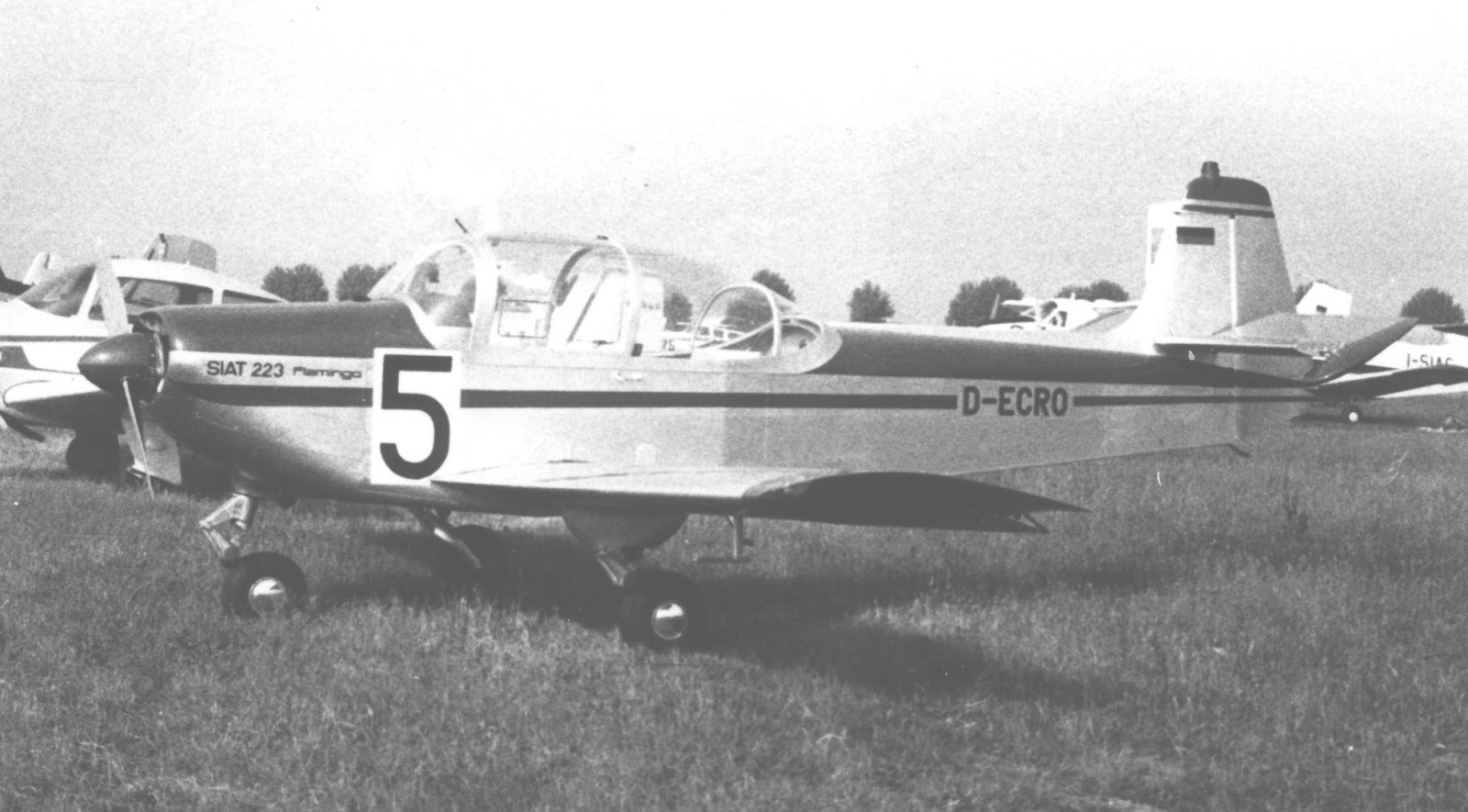
MBB 223 Flamingo
MFI-17 Mushshak
Yak-130
Attack Helicopter
Mil Mi-24
SA-342 Gazelle
Mil Mi-2
Subscribe to:
Posts (Atom)


.jpg)
.jpg)
.jpg)
.jpg)
.jpg)
.jpg)
.jpg)
.jpg)
.jpg)
.jpg)
.jpg)
.jpg)
.jpg)
.jpg)
.jpg)
.jpg)