Showing posts with label Russian Helicopters. Show all posts

Saturday, January 2, 2016

Egypt Set to Get 46 Kamov Ka-52K Navalized Attack Helicopters from Russia for it's Mistral Helicopter Carrier

Ka-52Ks were designed for French-made Mistral helicopter carriers that were to join the Russian Navy last year, before France cancelled the deal over Ukraine. The warships are now being bought by Cairo. "In the outgoing year, new contracts were signed with Russian and foreign helicopter users," Russian Helicopters Director-General Alexander Mikheev said in a statement published in the corporate magazine.
Kamov Ka-52 Water Hover Profile
He added that a major sale of Kamov naval helicopters were part of the deals that Russia's state arms exporter Rosoboronexport had inked in 2015. The Ka-52K is a naval modification of the Kamov Ka-52 Alligator. It has reinforced landing gears intended for ship-borne attacks.

Russia and France officially terminated the 1.2 billion euro (some $1.28 billion at current exchange rates) contract on the delivery of the warships in August following French President Francois Hollande’s suspension of the supply late last year over the Ukrainian conflict. In October, Cairo and Paris signed a contract for Egypt's purchase of the warships originally built for Russia.

Tuesday, December 22, 2015

Afghanistan 'Poised To Acquire' Military Helicopters From India

India has delivered its first major offensive military platform to Kabul, with a Mi 25 attack helicopter reaching Afghanistan earlier this month. The first of the four Russian origin choppers that have been gifted to the neighbouring nation has arrived in Afghanistan, with three more on the way, senior officials have told ET.The attack helicopters, designed to take on fortified enemy positions and flying in troops to locations prone to heavy ground fire, will join the Afghanistan Air Force that already operates three of the Indian built Cheetal light helicopters.
The delivery marks the first time India has gifted offensive combat capability to Afghanistan, a sensitive topic in the past due to strong objections by Pakistan. Under the agreement, which has the approval of Russia which is the original manufacturer, India will also train Afghan defence personnel on operations.In the past, India has transferred non-lethal equipment, including vehicles, transport choppers, communication equipment and medical supplies to Afghanistan. However India is a major training partner with Kabul sending across cadets for various courses as well as basic officers training programs.

India is currently in the process of retiring its Mi 25 chopper fleet that are being replaced with newer generation Apache choppers that have already been contracted from the US this year under a government-to-government deal.The Mi 25 transfer is the second helicopter dispatch to take place this year. In April, India delivered three military choppers to Kabul weeks ahead of the first visit by Afghanistan President Ashraf Ghani. The three Cheetal utility helicopters were manufactured by Hindustan Aeronautics Limited ( HAL) with Afghan pilots and technicians trained to operate them.

Sunday, December 20, 2015

Russia-Egypt Signed The Deal to Overhaul Egyptian Air Force Mi-8T, Mi-17 Fleet

Russian defense and aerospace equipment manufacturer Russian Helicopters says that,over the next two years, it will undertake comprehensive maintenance, repair and overhaul works on 41 Mi-8 T and three Mi-17 helicopters of the Egyptian Air Force at the country's main military industrial complex outside Cairo.

Egyptian Mil Mi-8 HipC helicopter.
In a statement released on Dec. 8, Russian Russian Helicopters Chief Executive Officer (CEO) Alexander Mikheev said the agreement with Egypt also provides for the retooling and upgrading of the aircraft repair plant at the Helwan Factory for Developed Industries (HFDI) to provide technical support to the MRO program.

"The Egyptian Air Force's fleet of 41 Mi-8Ts and 3 Mi-17-1V helicopters will all undergo comprehensive repair work at this facility," he said. "We feel it is vital to build upon the already positive image that Russian-made helicopters have abroad."

"That is why we are prioritizing work to establish an after-sales network providing first-class maintenance and repair services for Russian-made helicopters throughout their full life-cycle," Mikheev said.
In addition, the company will train Egyptian Air Force aviation technicians and mechanics in the conduct of comprehensive repair and overhaul works on Mi-8T, Mi-17v-5 and Mi-17v-1 helicopter models at the Novosibirsk Aircraft Repair Plant, its main factory in Russia.

Mikheev said all operators of Russian Helicopters in the Middle East and North Africa regions should take advantage of the new Egyptian facility to get genuine after-sales technical support, spares and accessories to avoid aircraft accidents and costly equipment loses arising from the use of copy-cat components on its products.

"We urge all those who operate Russian Helicopters globally to take this opportunity to use the after-sales service provision offered by Russian Helicopters or certified enterprises, and to steer clear of dubious suppliers and providers," he said. "After all, the lives of pilots and many others depend on the quality of the components used and of the repairs and maintenance work carried out."
The Helwan facility is the second Russian Helicopters MRO center to be set up in Africa. It comes two years after the company certified South African defense and aerospace equipment manufacturer Denel Aviation to provision of maintenance, repair and overhaul works for its models of military and civilian helicopters in Africa.

Last year, the Russian company announced that it was negotiating for the possible establishment of an additional MRO facility in Nigeria to serve the operators of its military and civilian aircraft in West Africa.

Russian Helicopters products — especially the Mi-8, Mi-17, Mi-26, Mi-28 and Mi-35 models — are operated in combat and transportation roles by the majority of airforces in North, East, West, Central and Southern Africa.

Hundreds of broken-down earlier models, some of which can be salvaged for repair, are also being held by many African air forces, which lack funds for essential equipment repairs.

Russian-made civilian helicopters are also used extensively in the transportation of personnel and humanitarian aid, search and rescue, medical evacuation and off-shore aviation services, which are expanding with the discovery of more hydrocarbon resources on either side of the African continental shelf.

Sunday, September 13, 2015

China-Russia Heavy Lift Chopper Design Will Be Ready In 2016, First Prototype In 2020

China and Russia are close to finalizing an agreement to jointly develop a heavy-lift helicopter next year, according to senior Chinese helicopter designers.

“The project is progressing smoothly, and we are discussing with our Russian counterparts terms and clauses in the agreement. The negotiations should conclude before the end of this year and the development will start next year,” said Wu Ximing, chief helicopter designer at Aviation Industry Corp of China, at the Third China Helicopter Expo, which opened on Wednesday in Tianjin.

The new helicopter’s production will be based in China, he said, adding it will use the Ukraine-made Lotarev D-136 turboshaft engine at the initial mass-production stage.

“Our existing turboshaft engines’ maximum output power is about 1,000 kilowatts, not powerful enough to propel the heavy-lift helicopter. The Chinese engineers are developing a 5,000-kilowatt turboshaft engine that can be used by the aircraft in the future,” he said.

Lin Zuoming, AVIC’s chairman, said on Tuesday that he expects the helicopter to conduct its first flight around 2020.

Huang Chuanyue, deputy chief engineer at Avicopter, AVIC’s helicopter branch, said that China realized in 2008 that it needs a heavy-lift helicopter following a devastating earthquake in Sichuan province. The lack of such aircraft made it very difficult for relief forces to transport urgently needed materials to mountainous areas affected by the disaster, he said.

China then decided to cooperate with Russia, which has experience and know-how in the helicopter industry, to develop a heavy-lift helicopter to serve mainly civilian purposes.

After several years of negotiations, AVIC and Russian Helicopters signed a cooperation framework agreement on the project in Moscow in May.

“The helicopter will use China’s world-class avionics systems and advanced materials, while Russia will be responsible for the aerodynamic design, transmission gear and de-icing equipment,” Huang said.

According to AVIC, the aircraft will have a maximum takeoff weight of 38.2 metric tons and a maximum cruising speed of 300 km/h. It will be capable of flying at altitudes up to 5,700 meters and have a range of 630 km.

Huang said it will be able to carry 10 tons of cargo, or more than 100 people inside the cabin, or 15 tons in an external sling.

“Compared with Russia’s Mil Mi-26, now the largest helicopter used in China, the new aircraft will be more adaptable to plateaus and tropical regions,” he said. “This is very important because China has vast plateau areas and mountainous terrain, as well as many islands that are difficult to access by other means. That has been an extremely serious problem because China is often hit by natural disasters.”

The aircraft will also be of value for building infrastructure in mountainous terrain and on islands.

Huang said China will need at least 200 heavy-lift helicopters within the coming 30 years, and the international market’s demand will reach about 2,000 in that time.

“We expect this helicopter will corner about 25 percent of the international market for this type,” he said.

Currently, heavy-lift helicopters in use include the United States’ Boeing CH-47 Chinook, Sikorsky CH-53E Super Stallion and Russia’s Mil Mi-26 series. The US and Russia continue to upgrade these types and aspire to maintain their joint dominance of the heavy-lift helicopter market, observers said.

Monday, March 30, 2015

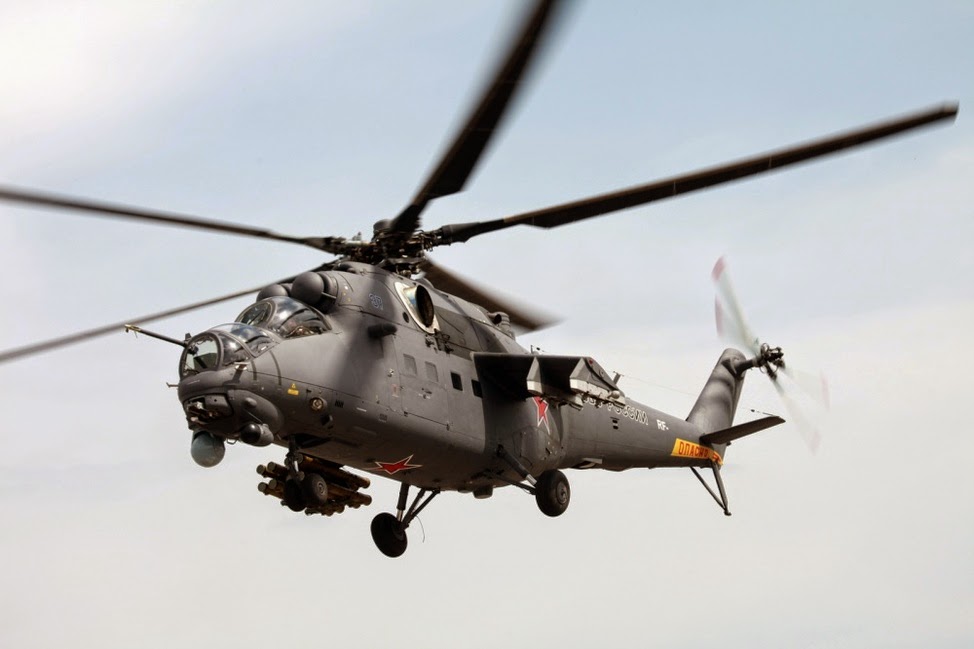
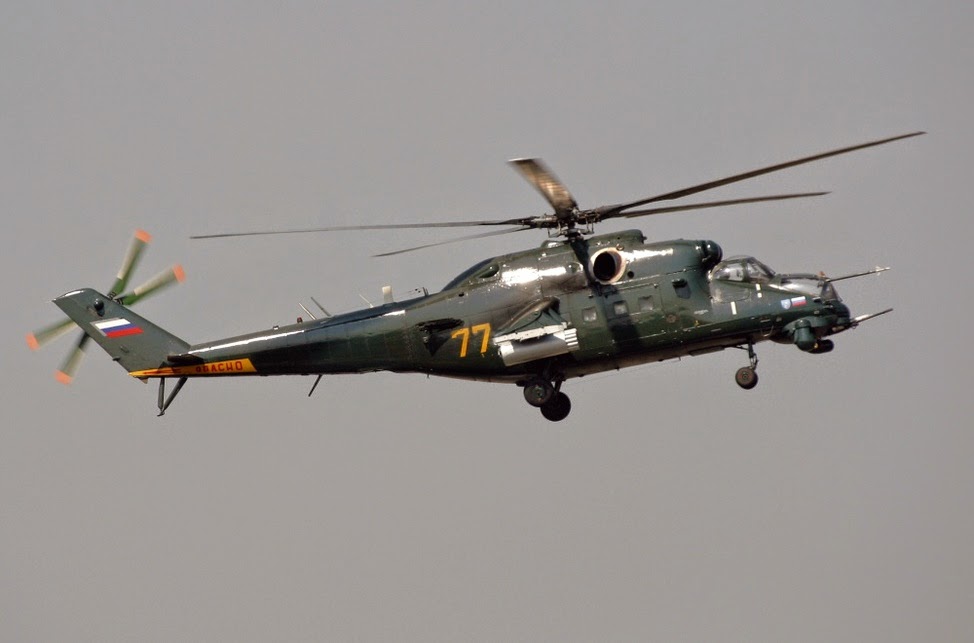
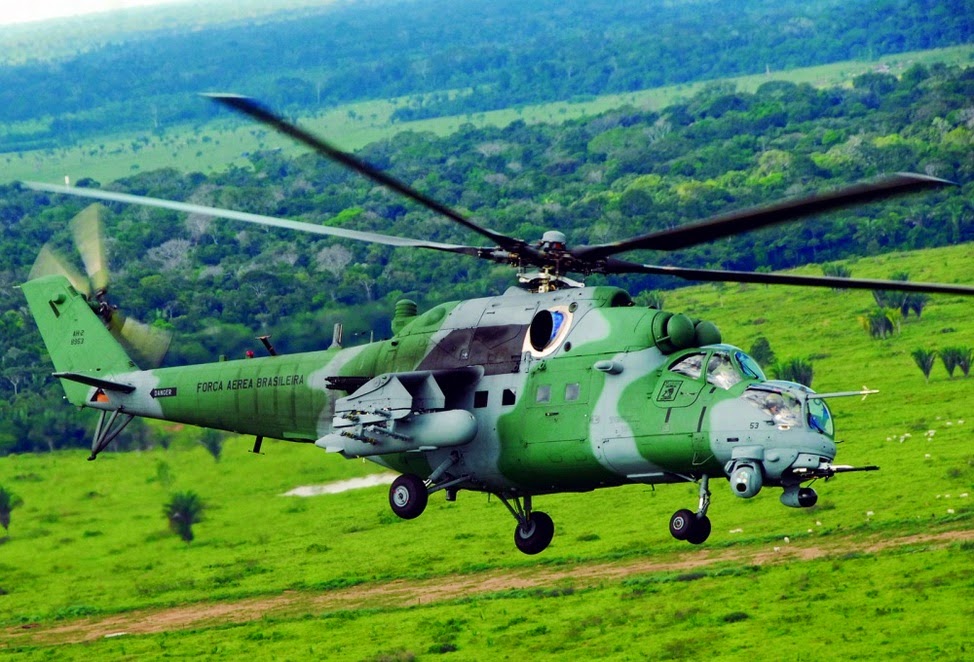
Mi-35 Attack helicopters General Information

The multirole Mi-35M attack helicopter is a comprehensive modernisation of the Mi-24V. The Mi-35M was developed by the Mil Moscow Helicopter Plant, and has been series produced at Rostvertol since 2005.

The Mi-35M offers round the clock:

Combat use of guided and unguided weapons in regular and challenging climate conditions. Operational for attack flights at altitudes of 10-25 m daytime and 50 m at night over land or water.

For round-the-clock combat use, the Mi-35M is equipped with the latest navigation and avionics suite with multifunction coloured displays, target sights system that includes a thermal imager and TV channels, laser range finder and location finder.

The Mi-35M is distinguished by its improved construction. It is equipped with the latest Klimov-produced powerful VK-2500 turboshaft engines, fibreglass main rotor blades, main rotor head with elastomeric joints, a new swashplate and X-type tail rotor. The Mi-35M’s fuselage boasts shortened stub wings and fixed landing gear.

The Mi-35M boasts enhanced flight capabilities, and can be operated at high temperatures and in mountainous terrain. The Mi-35M’s design ensures low noise levels, greater combat resilience, and reduces the workload on maintenance staff.

In addition to its attack capabilities, the Mi-35M can also be used in other operations: 

 
Landing-transporting up to 8 paratroopers, with equipment, in the transport cabin;

Transporting military supplies or other cargo weighing up to 1,500 kg internally. The Mi-35M is also fitted with an external sling system, expanding its cargo carrying capacity to 2,400 kg.

Medical uses include carrying the sick and injured along with medical personnel.

Mi-24/25/35 helicopters have proved their high levels of operational efficiency over many years in service. The Mi-35M combines this unique experience of combat operation with the latest achievements and developments in helicopter building.

The Mi-35 is operated by the Armed Forces of Russia, Venezuela, Brazil and Azerbaijan.

Features:  


Photos:


Sunday, March 16, 2014

Russia Arms Sales Grew Sharply in 2012 – Report

STOCKHOLM, January 31 (RIA Novosti) – Russian defense companies saw a large increase in arms sales in 2012 due to growing domestic procurement, an independent think tank said Friday.
 
Russian defense companies saw a large increase in arms sales in 2012
The Stockholm International Peace Research Institute (SIPRI) released new data on international arms production, showing that while sales by companies in the United States, Canada and most West European countries continued to fall, arms sales by Russian firms increased by 28 percent.

Sales of arms and military services by the largest arms-producing companies totaled $395 billion in 2012, according to SIPRI's annual list of the world’s 100 largest arms manufacturers.

The seven Russian companies that made it into the 2012 SIPRI Top 100, including Almaz-Antei, United Aircraft Corporation and Russian Helicopters, sold over $22 billion worth of weaponry.

“Russian arms companies continue to maintain high export levels, but the increase in estimated arms sales in 2012 mainly reflects large and growing domestic sales, as part of Russia’s $700 billion 2011–20 State Armaments Plan,” the institute said in a press release.

According to Sam Perlo-Freeman, Director of SIPRI's Military Expenditure and Arms Production Program, “the Russian arms industry is gradually re-emerging from the ruins of the Soviet industry.”

“Nonetheless, the industry is still plagued by outdated equipment, inefficient organization and widespread corruption, which will continue to limit Russia’s ability to compete technologically with the West,” he said.

Russia became the world’s second-largest arms exporter in 2011, generating $13.2 billion in revenues.

In 2012, Russia exported $15.2 billion worth of weaponry while adding Afghanistan, Ghana, Oman and Tanzania to a list of about 80 foreign customers.

India remains the leading purchaser of Russian arms, with China, Vietnam, Myanmar, Venezuela and countries of the Middle East also figuring among the main clients of the Russian defense industry.

Thursday, February 6, 2014

Russia Arms Sales Grew Sharply in 2012 – Report


STOCKHOLM, January 31 (RIA Novosti) – Russian defense companies saw a large increase in arms sales in 2012 due to growing domestic procurement, an independent think tank said Friday.

The Stockholm International Peace Research Institute (SIPRI) released new data on international arms production, showing that while sales by companies in the United States, Canada and most West European countries continued to fall, arms sales by Russian firms increased by 28 percent.

Sales of arms and military services by the largest arms-producing companies totaled $395 billion in 2012, according to SIPRI's annual list of the world’s 100 largest arms manufacturers.

The seven Russian companies that made it into the 2012 SIPRI Top 100, including Almaz-Antei, United Aircraft Corporation and Russian Helicopters, sold over $22 billion worth of weaponry.

“Russian arms companies continue to maintain high export levels, but the increase in estimated arms sales in 2012 mainly reflects large and growing domestic sales, as part of Russia’s $700 billion 2011–20 State Armaments Plan,” the institute said in a press release.

According to Sam Perlo-Freeman, Director of SIPRI's Military Expenditure and Arms Production Program, “the Russian arms industry is gradually re-emerging from the ruins of the Soviet industry.”

“Nonetheless, the industry is still plagued by outdated equipment, inefficient organization and widespread corruption, which will continue to limit Russia’s ability to compete technologically with the West,” he said.

Russia became the world’s second-largest arms exporter in 2011, generating $13.2 billion in revenues.

In 2012, Russia exported $15.2 billion worth of weaponry while adding Afghanistan, Ghana, Oman and Tanzania to a list of about 80 foreign customers.

India remains the leading purchaser of Russian arms, with China, Vietnam, Myanmar, Venezuela and countries of the Middle East also figuring among the main clients of the Russian defense industry.