Showing posts with label insurgency. Show all posts

Monday, March 30, 2015

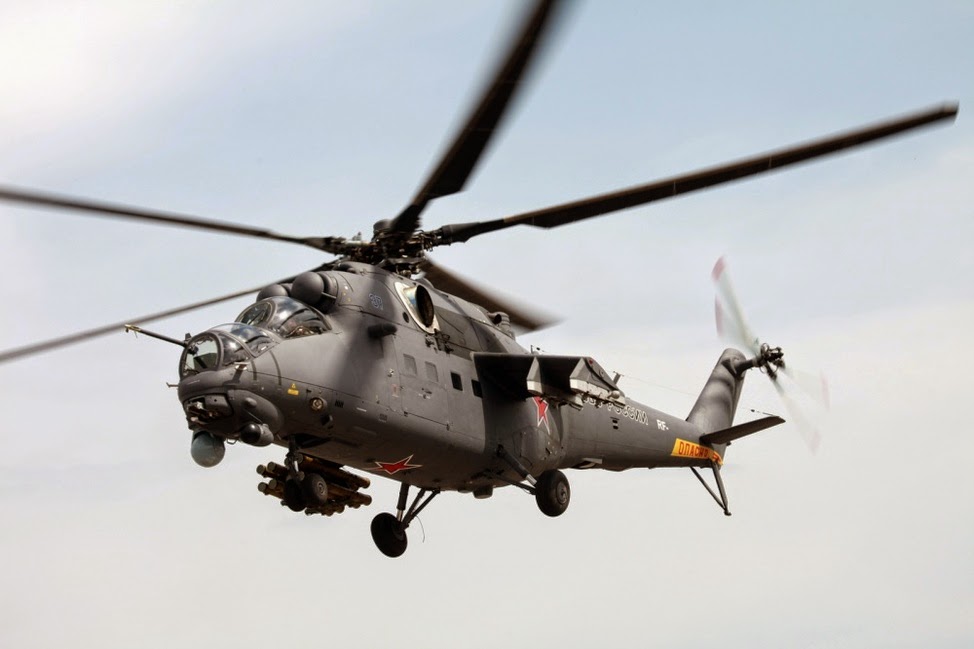
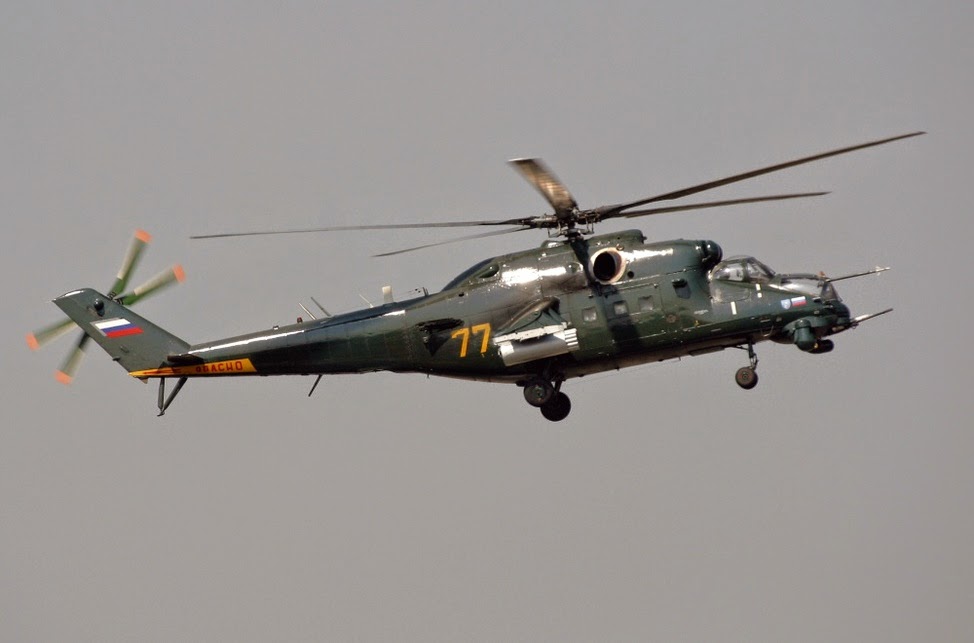
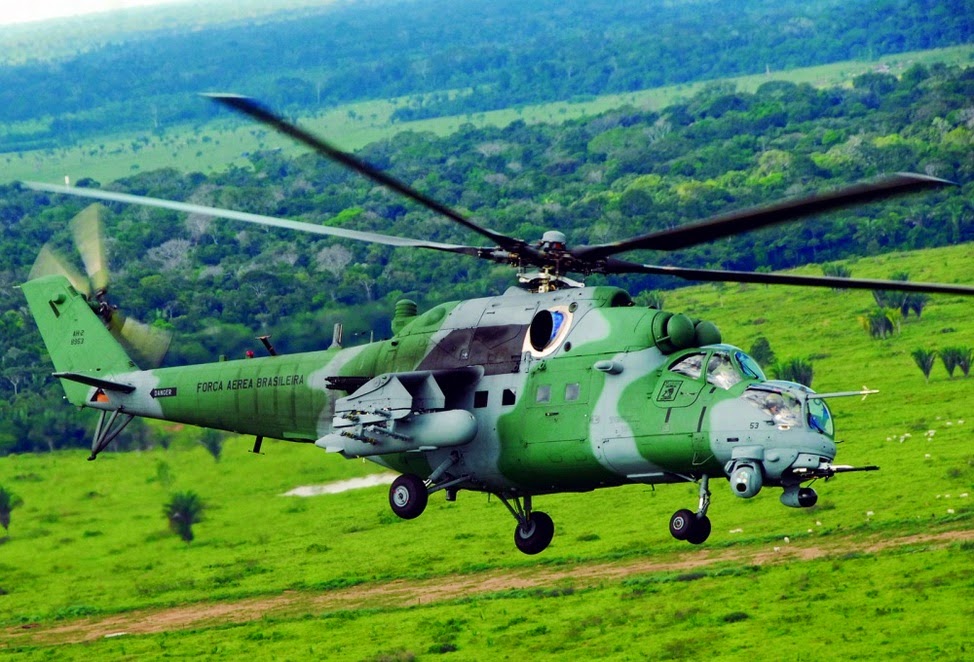
Mi-35 Attack helicopters General Information

The multirole Mi-35M attack helicopter is a comprehensive modernisation of the Mi-24V. The Mi-35M was developed by the Mil Moscow Helicopter Plant, and has been series produced at Rostvertol since 2005.

The Mi-35M offers round the clock:

Combat use of guided and unguided weapons in regular and challenging climate conditions. Operational for attack flights at altitudes of 10-25 m daytime and 50 m at night over land or water.

For round-the-clock combat use, the Mi-35M is equipped with the latest navigation and avionics suite with multifunction coloured displays, target sights system that includes a thermal imager and TV channels, laser range finder and location finder.

The Mi-35M is distinguished by its improved construction. It is equipped with the latest Klimov-produced powerful VK-2500 turboshaft engines, fibreglass main rotor blades, main rotor head with elastomeric joints, a new swashplate and X-type tail rotor. The Mi-35M’s fuselage boasts shortened stub wings and fixed landing gear.

The Mi-35M boasts enhanced flight capabilities, and can be operated at high temperatures and in mountainous terrain. The Mi-35M’s design ensures low noise levels, greater combat resilience, and reduces the workload on maintenance staff.

In addition to its attack capabilities, the Mi-35M can also be used in other operations: 

 
Landing-transporting up to 8 paratroopers, with equipment, in the transport cabin;

Transporting military supplies or other cargo weighing up to 1,500 kg internally. The Mi-35M is also fitted with an external sling system, expanding its cargo carrying capacity to 2,400 kg.

Medical uses include carrying the sick and injured along with medical personnel.

Mi-24/25/35 helicopters have proved their high levels of operational efficiency over many years in service. The Mi-35M combines this unique experience of combat operation with the latest achievements and developments in helicopter building.

The Mi-35 is operated by the Armed Forces of Russia, Venezuela, Brazil and Azerbaijan.

Features:  


Photos:


Sunday, October 19, 2014

Pakistan Army Rescued A Humvee From Fazlu's Terrorists

A Humvee rescued from Mollah Fazlullah's command terrorists by Pakistan Army. Its heard that terrorist leader (Mollah Fazlullah) personally used this once.

Mollah Fazlullah operates Pakistan Taliban named 'Tehrik-e-Taliban, Pakistan' from Kunar, Afghanistan. Intelligence reports stated that this ill-borne mischievous terrorist leader got funds and all other supports from Indian Intelligent Orgs. (such as RAW) to destabilized Pakistan from inside.

Mollah Fazlullah and RAW operators gathered all Uzbek & North-Afghan terrors and pushing them inside Pakistan through Pak-Afghan borders. They are responsible for all terrorist attacks from near past to present, inside Pakistan.

Sunday, March 16, 2014

Libya still in chaos three years after Gaddafi

Libya’s former PM left the country last week after Parliament voted him out of office. A North Korean-flagged oil tanker, the Morning Glory, illegally took a cargo of crude from rebels in the east of the country and safely left the port, ignoring a government minister’s threat that the vessel would be “ turned into a pile of metal” if the cargo ship sailed away. Militias based in Misrata in northwestern Libya, known for their violence and independence, have launched an offensive against the eastern rebels which could be regarded as the beginning of a civil war between western and eastern Libya.
Without a central government with any real power, Libya is breaking into pieces. And all this is happening nearly three years after Muammar Gaddafi’s counteroffensive to suppress the uprising in Benghazi. With the US keeping its covert involvement in the Libyan events, NATO launched a war in which rebel militiamen played a secondary role which led to the overhrow of the Gaddafi regime and to the killing of Gaddafi.

The past weeks offer have shown that leaders and countries which were full of enthusiasm in 2011, when the war in the supposed interest of the Libyan people broke out, have little interest in the developments in Libya now. Initially, US President Barack Obama spoke proudly of his role in the prevention of a “massacre” in Benghazi at that time. But neither Washington nor London or Paris voiced any protest after the militiamen, backed by NATO, opened fire on a demonstration against America’s presence in Tripoli in November last year in which at least 42 protesters were killed.

Coincidentally, it was last week that Al-Jazeera broadcast the final episode in a three-year investigation of the Lockerbie bombing that killed 270 people . For years this was considered to be Gaddafi’s greatest crime but the documentary proved beyond reasonable doubt that the Libyan intelligence officer, Abdelbaset al-Megrahi, convicted of carrying out the bombing, was innocent. Iran, acting through the Palestinian Front for the Liberation of Palestine – General Command, ordered the blowing up of Pan Am 103 in revenge for the shooting down of an Iranian passenger plane by the US navy carrier in 1988.
As you know, journalists say that if you want to find out government policy, imagine the worst thing they can do and then assume they are doing it.

However, the NATO countries that overthrew Gaddafi – and by some accounts gave the orders to kill him – did not do that because he was a tyrannical leader. It was rather because he pursued a nationalist policy backed by big money which was at odds with western policies in the Middle East. This is equally true of Western and Saudi intervention in Syria.

Libya is breaking apart. Its oil exports have fallen from !.4 million barrels a day in 2011 to 235,000 barrels a day. Militia s hold 8,000 people in prisons, many of whom say they have been tortured. “The longer Libyan authorities tolerate the militias acting with impunity, the more entrenched they become, and the less willing to step down,” said Sarah Leah Whitson, Middle East and North Africa director at Human Rights Watch.

It is a sorrowful fact that the militias in Libya are getting stronger. Libya is a country where ethnic warlords are often simply well-armed racketeers using their power and taking advantage of the absence of an adequate police force. Nobody is safe in the country: the head of Libya’s military police was killed in Benghazi in October while Libya’s first post-Gaddafi prosecutor general was shot dead in Derna on February 8. It often happens that the motives for killings are obscure.

Western and regional governments are responsible for much that has happened in Libya, but so too should the media. The Libyan uprising was reported, mainly, as a clash between good and evil. Gaddafi and his regime were demonized and his opponents were treated with a lack of skepticism.

Can anything positive be learned from the Libyan experience ? Of importance here is that demands for civil, political and economic rights, which were at the centre of the Arab Spring uprisings, mean nothing without a nation state to guarantee them; otherwise, national loyalties will find themselves in a state of sectarian, regional and ethnic feud.

“Freedom under the rule of law is almost unknown outside nation-states,” writes a British politician, journalist and author, Daniel Hannan MEP, in a succinct analysis of why the Arab Spring failed. “Constitutional liberty requires a measure of patriotism, meaning a readiness to accept your countrymen’s disagreeable decisions, and to abide by election results when you lose,” he added in conclusion.

Voice of Russia, Independent
Read more: http://voiceofrussia.com/2014_03_16/Three-years-after-Gaddafi-Libya-still-in-chaos-9983/