Showing posts with label Islamic World. Show all posts

Saturday, November 8, 2014

Map: The countries that recognize Palestine as a state - The Washington Post

The 135th member (Sweden) of the United Nations to officially recognize Palestine as an independent state. The act sparked a tetchy diplomatic incident with Israel.
 
 Map of the countries that recognize Palestine as a state.
 
On the ground, a separate, viable Palestinian state is far from a reality. Israel occupies the West Bank and East Jerusalem, and it partially blockades the Gaza Strip, the territories that would comprise it. The continued expansion of Israeli settlements into the West Bank makes tackling the question of Palestinian sovereignty all the more difficult. So, too, the apparentcollapse of talks between the Israeli government and its Palestinian interlocutors.

Sweden's Foreign Minister Margot Wallstrom said her government's decision was aimed at supporting the Palestinian Authority and its beleaguered President Mahmoud Abbas, particularly given the present tensions in Jerusalem. "It is important to support those who believe in negotiations and not violence," she told Al Jazeera. "This will give hope to young Palestinians and Israelis that there is an alternative to violence."

In the absence of progress in negotiations with Israel, Abbas has taken the Palestinians' case to the United Nations in recent years. The effort is mostly symbolic — a bid to deepen the political isolation of the right-wing government of Israeli Prime Minister Benjamin Netanyahu.

Sweden's move reflects a wider European frustration with Netanyahu. This week, French socialist lawmakers said they were preparing a bill calling on the government to recognize Palestine. In mid-October, British lawmakers overwhelmingly passed a motion indicating "that the Government should recognise the state of Palestine alongside the state of Israel, as a contribution to securing a negotiated two state solution."

The motion is nonbinding, but serves as one more sign of Europe's growing impatience with the Mideast status quo. The United States would want to see the two-state solution come into fruition before conferring official recognition upon Palestine. But that is, at present, a naive hope: A number of prominent ministers in Netanyahu's government reject outright the possibility of the two-state solution ever being realized.

Before Sweden's decision, tiny Iceland was the only Western European country to recognize Palestine.

As you can see in the map, most of the other nations that have not officially recognized Palestine are in the E.U. or are U.S. partners who wouldn't want to ruffle Washington's feathers. These include South Pacific island nations like Kiribati and Nauru.

Even then, it's quite likely that the U.S. will find itself on this map within a steadily shrinking patch of gray in the months and years to come.

Source: The Washington Post

Sunday, March 16, 2014

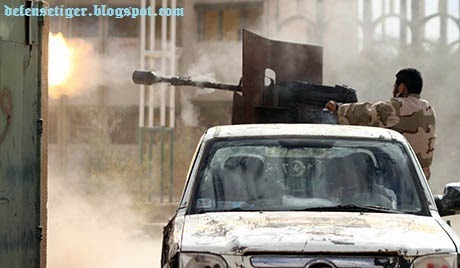
Libya still in chaos three years after Gaddafi

Libya’s former PM left the country last week after Parliament voted him out of office. A North Korean-flagged oil tanker, the Morning Glory, illegally took a cargo of crude from rebels in the east of the country and safely left the port, ignoring a government minister’s threat that the vessel would be “ turned into a pile of metal” if the cargo ship sailed away. Militias based in Misrata in northwestern Libya, known for their violence and independence, have launched an offensive against the eastern rebels which could be regarded as the beginning of a civil war between western and eastern Libya.
Without a central government with any real power, Libya is breaking into pieces. And all this is happening nearly three years after Muammar Gaddafi’s counteroffensive to suppress the uprising in Benghazi. With the US keeping its covert involvement in the Libyan events, NATO launched a war in which rebel militiamen played a secondary role which led to the overhrow of the Gaddafi regime and to the killing of Gaddafi.

The past weeks offer have shown that leaders and countries which were full of enthusiasm in 2011, when the war in the supposed interest of the Libyan people broke out, have little interest in the developments in Libya now. Initially, US President Barack Obama spoke proudly of his role in the prevention of a “massacre” in Benghazi at that time. But neither Washington nor London or Paris voiced any protest after the militiamen, backed by NATO, opened fire on a demonstration against America’s presence in Tripoli in November last year in which at least 42 protesters were killed.

Coincidentally, it was last week that Al-Jazeera broadcast the final episode in a three-year investigation of the Lockerbie bombing that killed 270 people . For years this was considered to be Gaddafi’s greatest crime but the documentary proved beyond reasonable doubt that the Libyan intelligence officer, Abdelbaset al-Megrahi, convicted of carrying out the bombing, was innocent. Iran, acting through the Palestinian Front for the Liberation of Palestine – General Command, ordered the blowing up of Pan Am 103 in revenge for the shooting down of an Iranian passenger plane by the US navy carrier in 1988.
As you know, journalists say that if you want to find out government policy, imagine the worst thing they can do and then assume they are doing it.

However, the NATO countries that overthrew Gaddafi – and by some accounts gave the orders to kill him – did not do that because he was a tyrannical leader. It was rather because he pursued a nationalist policy backed by big money which was at odds with western policies in the Middle East. This is equally true of Western and Saudi intervention in Syria.

Libya is breaking apart. Its oil exports have fallen from !.4 million barrels a day in 2011 to 235,000 barrels a day. Militia s hold 8,000 people in prisons, many of whom say they have been tortured. “The longer Libyan authorities tolerate the militias acting with impunity, the more entrenched they become, and the less willing to step down,” said Sarah Leah Whitson, Middle East and North Africa director at Human Rights Watch.

It is a sorrowful fact that the militias in Libya are getting stronger. Libya is a country where ethnic warlords are often simply well-armed racketeers using their power and taking advantage of the absence of an adequate police force. Nobody is safe in the country: the head of Libya’s military police was killed in Benghazi in October while Libya’s first post-Gaddafi prosecutor general was shot dead in Derna on February 8. It often happens that the motives for killings are obscure.

Western and regional governments are responsible for much that has happened in Libya, but so too should the media. The Libyan uprising was reported, mainly, as a clash between good and evil. Gaddafi and his regime were demonized and his opponents were treated with a lack of skepticism.

Can anything positive be learned from the Libyan experience ? Of importance here is that demands for civil, political and economic rights, which were at the centre of the Arab Spring uprisings, mean nothing without a nation state to guarantee them; otherwise, national loyalties will find themselves in a state of sectarian, regional and ethnic feud.

“Freedom under the rule of law is almost unknown outside nation-states,” writes a British politician, journalist and author, Daniel Hannan MEP, in a succinct analysis of why the Arab Spring failed. “Constitutional liberty requires a measure of patriotism, meaning a readiness to accept your countrymen’s disagreeable decisions, and to abide by election results when you lose,” he added in conclusion.

Voice of Russia, Independent
Read more: http://voiceofrussia.com/2014_03_16/Three-years-after-Gaddafi-Libya-still-in-chaos-9983/

Thursday, February 6, 2014

'Purpose of US foreign policy to create bad image of Iran' - expert

Iran, which has been repeatedly slammed by Washington over its poor human rights record, has published its own scathing report on rights violations in the United States. The report by Iran’s paramilitary Basij (bah-SEEJ) force says Washington is using human rights as a tool to wage war on other countries, while violating them at home. The Voice of Russia talked to Foad Izadi, faculty member at the University of Tehran.

The report focuses on rights abuses in 2013 and questions the United States’ role as the self-proclaimed defender of human rights and accuses Washington of an array of abuses.
 
The 30-page document lists death penalties, violation of prisoners’ rights, lack of free speech and breach of privacy rights among abuse practices in the United States.

It also refers to specific cases, including whistle-blowing activities of Edward Snowden that triggered privacy concerns and diplomatic scandals all over the world.

Tehran is also concerned about police discrimination targeting Muslims ‘for nothing but their faith’, specifying that they are viewed as suspects and are stigmatized by the authorities who are supposed to protect them.

The report - available in Persian, English and Arabic - was issued just a week after the United Nations published its survey focusing on human rights violations in the Islamic Republic, which was immediately dismissed by Iranian officials.

Foad, what do you make of a UN report on rights violations in Iran that was that was released recently?

I think, after keeping in mind that the source of that report was opposition figures and organizations that have been trying to overthrow the Iranian government for the last thirty-some years, and because of that type of source, you should imagine that the report is going to be critical of the Iranian government. Unfortunately, in the UN they have a number of countries like the United States that have more power than just one vote. Since the US is part of the Security Council, and because of its historical role in the United Nations, what happens is some issues that interest the US government, there is more exercise of power, and I think the UN report needs to be viewed from that angle, that the people who actually managed to write it and provided information for that had that in line to damage the reputation of Iran internationally.

So, as you’re saying, I wish to considerer the source here. And probably America was behind this, America really wants to show how bad Iran is, even if’s true or not true. So, do you feel that this report was accurate?

Well, in any type of research that you look at, there are two questions that you have to have an answer for. One is, who is doing it, and in this case we have one person, Ahmad Shahid his name is, who is connected with the US government, is in line with the US foreign policy, and this report having this purpose of sort of creating a bad image of Iran. So, this is the one question you want an answer for: who has done it. And the second question is what they said, what sources did they use. And this is true for any type of research. So, if you want to answer these two questions in regard to that report, I think, you will end up with the conclusion that you have to read this report keeping in mind these two factors.

Well, how would you describe the current situation with human rights in Iran?

We have a country that relatively, in this part of the world that we live in, is doing better than its neighbors. For example, in Iran, women go to universities, 60% of universities in Iran have females as students. We have some countries in this part of the world, say, maybe, Saudi Arabia, that actually hush up the treating of its female population, they don’t even have the right to elect. In terms of freedom of the speech, if you go to any news stand in Iran, you would see 20, 25 sometimes, newspapers that are published daily in Iran. If you look at the US in this regard, generally, if you go to any news stand in the United States, you’ll get 3 – 4 newspapers, you’ll get the New York Times, you’ll get the USA Today, Wall Street Journal and the local paper. So, in terms of quantity, we are doing better than many countries, and in terms of the range of opinions that are presented, you have newspapers that are criticizing the government on daily basis and press that is supporting the government on daily basis, and so there’s a wide range of opinions that is being presented, and anyone in Iran who wants to have criticism of government, something that views the government from a critical prospective, turns to newspapers that are focusing on that.

In your opinion, why does the West continually slam Tehran for its human rights record, then?

You know, in Iran, we had a government that the West liked, we had the shah government, dictatorship that imprisoned a lot of people, killed a lot of its opponents, and was fully, fully supported by the US government. In fact, the shah’s secret service, was funded and managed by the CIA for many decades. And what happened with the shah, in fact, during the 1979 revolution, was that people of Iran finally got tired of this tyrant, had a popular revolution, overthrew the tyrant, and then overthrew that structure that supported him, kicked out the Americans from Iran, and since that time, the US government – you know, they don’t like to be kicked out of countries – so, it’s obviously something that they haven’t forgotten, and this has been the history of animosity, and since, during the Iran-Iraq war, the United States’ government supported Saddam’s army. In fact, they have published reports during the war, the US was providing satellite images of Iranian troops, and the government of Iraq at that time, Saddam’s government was using this intelligence, these satellite images to attack Iranian troops with chemical weapons. When we were talking last time about the Syrian crisis, we mentioned that the United States caused a lot of emotion internationally claimed at the Syrian government was using chemical weapons. But during the Iran-Iraq war, the US actually was providing the intelligence to the Iraqi army to attack Iranian troops with chemical weapons. The sanctions that Iranian people are experiencing are quite difficult, the US is behind that, you know, and Russia wanted to sign an agreement of Iran selling oil to Russia and then getting goods from Russia, and the US is opposing this deal, just because they don’t want Iran’s economy to prosper, in fact, they don’t want the Russian economy to prosper either.

Let’s talk about America. And what can you say about human rights in the United States? In your opinion, do you feel that there… Do they protect them?

Well, you have to basically look at impartial reports that are available, done by American human rights organizations, you have a number of American human rights organizations that are doing a good work, in fact, the report that was published in Iran recently was provided by American human rights organizations, The organization that published that report did not do any investigation of its own, they used the data that was available in the United States. And for human rights situation in the US, I guess, you need to talk to someone who is living there right now, but I guess the revelations of Edward Snowden show that first of all, the US government has no respect for people’s privacy. This is an indication that the US has major, major social problems. Then, a lot of prisoners in the United States come from minority groups. The US government, I think, is violating human rights on daily basis, killing people on daily basis, generally innocent civilians, bombing weddings, bombing just normal people who are going about their business. This is done by a country that I don’t think is having respect for human rights, because people are getting killed on daily basis by US drones are also human beings. The overall, I think, a lot of your listeners know the hypocrisy that exists in the US’s notorious adherence to human rights. As I said, they have a number of organizations within the United States that look on human rights issues, some of these organizations are facing difficulties, they are facing pressure from the US government. One of these organizations’ computers were confiscated, so it’s not easy for them to continue this type of work, but they are doing it.