Showing posts with label Civil war. Show all posts

Friday, February 27, 2015

Ukraine Begins Artillery Withdrawal From Front-Lines

Ukrainian troops have towed artillery away from the front-line in the war-ravaged east, in a step that seems to augur well for a ceasefire agreement signed with Russia-backed rebels.

The military on Thursday showed reporters seven or eight guns being towed away from the front at the village of Paraskoviyvka north of the government stronghold of Artemivsk.

Earlier, Reuters journalists saw a larger convoy of 30-40 vehicles also towing guns away from the front on a highway.

However, the Ukrainian defence ministry said in a statement carried by Associated Press news agency that it reserved the right to revise its withdrawal plans in the event of attack by rebel forces, who control large swaths of the east bordering Russia.

Ukraine 'preparing' nation for a long war
"Today Ukraine has begun the withdrawal of 100-millimetre guns from the line of confrontation," the military said, saying the step would be monitored by the Organisation for Security and Co-operation in Europe (OSCE).

A team of about 600 OSCE personnel is overseeing the implementation of the deal signed between Russia and Ukraine and brokered by France and Germany.

The intensity of fighting has declined notably in recent days, although the warring sides have continued to trade accusations of violations in the ceasefire that came into force on February 15.

The move was Kiev's most direct step to acknowledge that the ceasefire was finally holding a week after losing the strategic town of Debaltseve to rebels.

Rebels have been pulling back heavy weapons for two days, but Ukraine had until now held back from implementing the withdrawal, arguing that fighting had not yet ceased.

Since capturing Debaltseve, rebels have taken pains to emphasise that they now intend to abide by the peace deal to end the conflict that the UN says has claimed more than 5,000 lives since April last year.

The Ukrainian army reported no combat fatalities at the front for a second straight day on Thursday, the first time no troops have been killed since long before the truce was meant to take effect.

New sanctions

The withdrawal of artillery is "point two" of the peace agreement reached in the Belarus capital Minsk, so beginning it amounts to an acknowledgement that "point one" - the ceasefire itself - is being observed.

Western countries denounced the rebels and their presumed sponsor, Russian President Vladimir Putin, for advancing on Debaltseve despite the truce.

But they have since held out hope that the ceasefire will now hold, with the rebels having achieved that objective.

In the days after its troops were driven from Debaltseve, Ukraine maintained that it believed the rebels were reinforcing for another advance, particularly expressing fear for the city of Mariupol, a port city of 500,000 people.

Western countries have threatened to impose new economic sanctions on Moscow if the rebels advance further into territory the Kremlin calls "New Russia".
Russia, which denies aiding its sympathisers in Ukraine, said on Thursday the threats of more sanctions were cover for Western efforts to undermine the truce.

Sunday, March 16, 2014

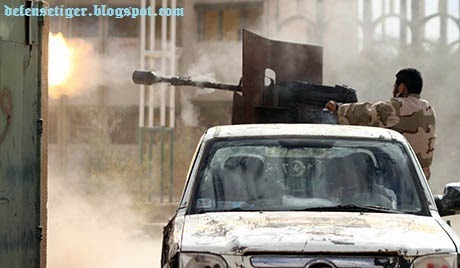
Libya still in chaos three years after Gaddafi

Libya’s former PM left the country last week after Parliament voted him out of office. A North Korean-flagged oil tanker, the Morning Glory, illegally took a cargo of crude from rebels in the east of the country and safely left the port, ignoring a government minister’s threat that the vessel would be “ turned into a pile of metal” if the cargo ship sailed away. Militias based in Misrata in northwestern Libya, known for their violence and independence, have launched an offensive against the eastern rebels which could be regarded as the beginning of a civil war between western and eastern Libya.
Without a central government with any real power, Libya is breaking into pieces. And all this is happening nearly three years after Muammar Gaddafi’s counteroffensive to suppress the uprising in Benghazi. With the US keeping its covert involvement in the Libyan events, NATO launched a war in which rebel militiamen played a secondary role which led to the overhrow of the Gaddafi regime and to the killing of Gaddafi.

The past weeks offer have shown that leaders and countries which were full of enthusiasm in 2011, when the war in the supposed interest of the Libyan people broke out, have little interest in the developments in Libya now. Initially, US President Barack Obama spoke proudly of his role in the prevention of a “massacre” in Benghazi at that time. But neither Washington nor London or Paris voiced any protest after the militiamen, backed by NATO, opened fire on a demonstration against America’s presence in Tripoli in November last year in which at least 42 protesters were killed.

Coincidentally, it was last week that Al-Jazeera broadcast the final episode in a three-year investigation of the Lockerbie bombing that killed 270 people . For years this was considered to be Gaddafi’s greatest crime but the documentary proved beyond reasonable doubt that the Libyan intelligence officer, Abdelbaset al-Megrahi, convicted of carrying out the bombing, was innocent. Iran, acting through the Palestinian Front for the Liberation of Palestine – General Command, ordered the blowing up of Pan Am 103 in revenge for the shooting down of an Iranian passenger plane by the US navy carrier in 1988.
As you know, journalists say that if you want to find out government policy, imagine the worst thing they can do and then assume they are doing it.

However, the NATO countries that overthrew Gaddafi – and by some accounts gave the orders to kill him – did not do that because he was a tyrannical leader. It was rather because he pursued a nationalist policy backed by big money which was at odds with western policies in the Middle East. This is equally true of Western and Saudi intervention in Syria.

Libya is breaking apart. Its oil exports have fallen from !.4 million barrels a day in 2011 to 235,000 barrels a day. Militia s hold 8,000 people in prisons, many of whom say they have been tortured. “The longer Libyan authorities tolerate the militias acting with impunity, the more entrenched they become, and the less willing to step down,” said Sarah Leah Whitson, Middle East and North Africa director at Human Rights Watch.

It is a sorrowful fact that the militias in Libya are getting stronger. Libya is a country where ethnic warlords are often simply well-armed racketeers using their power and taking advantage of the absence of an adequate police force. Nobody is safe in the country: the head of Libya’s military police was killed in Benghazi in October while Libya’s first post-Gaddafi prosecutor general was shot dead in Derna on February 8. It often happens that the motives for killings are obscure.

Western and regional governments are responsible for much that has happened in Libya, but so too should the media. The Libyan uprising was reported, mainly, as a clash between good and evil. Gaddafi and his regime were demonized and his opponents were treated with a lack of skepticism.

Can anything positive be learned from the Libyan experience ? Of importance here is that demands for civil, political and economic rights, which were at the centre of the Arab Spring uprisings, mean nothing without a nation state to guarantee them; otherwise, national loyalties will find themselves in a state of sectarian, regional and ethnic feud.

“Freedom under the rule of law is almost unknown outside nation-states,” writes a British politician, journalist and author, Daniel Hannan MEP, in a succinct analysis of why the Arab Spring failed. “Constitutional liberty requires a measure of patriotism, meaning a readiness to accept your countrymen’s disagreeable decisions, and to abide by election results when you lose,” he added in conclusion.

Voice of Russia, Independent
Read more: http://voiceofrussia.com/2014_03_16/Three-years-after-Gaddafi-Libya-still-in-chaos-9983/