Showing posts with label Asia-Pacific. Show all posts

Wednesday, December 30, 2015

Chinese Stealth Fighter J-20 Mighty dragon Goes Low RateInitial Production

In a Christmas gift for Chinese fighter pilots, December 25th saw the unveiling of a new J-20 fighter in fresh yellow fuselage primer on the runway of the Chengdu Aviation Corporation (CAC) factory. More notable than its paint color, however, was the numbering of the plane: "2101." As opposed to "2018" or "2019" to follow the eighth flying prototype "2017," "2101" suggests the plane is the first of the low rate initial production (LRIP) airframes, which signify the move away from prototype production to building fighters for actual military use.
"2101" rolled out of the factory on December 26, 2015, still in its bright yellow factory primer. 2101 is structurally most similar to "2016" and "2017", the 7th and 8th J-20 prototypes. With the first LRIP squadron likely to be completed by the end of 2016, Chinese pilots will quickly put the J-20 through the paces to push every bit of capability out of their new stealth fighters.
LRIP is the stage in the program where CAC will build enough production fighters (about 12-24) for test and evaluation flights by the PLAAF to understand the J-20's capabilities, before further committing to large-scale production. Initial operational capability should come around in the 2018-2019 timeframe, once the Chinese Test Flight Establishment (CTFE) regiment develops the technical proficiency and competence to use the J-20 to the fullest in combat operations.

"2101" is the ninth J-20 fighter built by the CAC in under five years (the first J-20 prototype flew in January 2011). In comparison, the first production F-35A (AF-6) flew in February 2011, five years after the first F-35 prototype flew in February 2006. The F-22 also took about five years to transition from first flight to LRIP (September 1997 and February 2002).

Given over a decade's worth of global technology advances, intensive investment and competent program management, it should come as no surprise that China will be the second nation in the world to start production of stealth fighters. The J-20 will give the PLAAF a technological advantage over every other Asian air force. While the J-20 may not be able to supercruise (fly at supersonic speeds without using fuel-thirsty afterburners) with its current Russian AL-31 turbofan engines, its high level of stealth, long range and electronic warfare capabilities will make it a very formidable foe for other fighters.

The J-20 also carries a powerful active electronically scanned array (AESA) radar, nose-mounted infrared search and tracking sensors, and fuselage-mounted cameras to give its pilot a VR 360 degree imaging (similar to the F-35's avionics). For weapons, the J-20 would have long-range missiles like the PL-12, PL-15, and PL-21, and short-ranged infrared-guided PL-8 and PL-10. Networked with other platforms such as the Divine Eagle anti-stealth drone, the J-20's array of sensors will give it the ability to go toe-to-toe with other stealth fighters.

While the J-20 certainly a formidable foe today, in the next several years of development advances, its capabilities can be expected to grow. Future J-20's will likely have super-cruise capable Chinese WS-15 turbofan engines and improved gallium nitride AESA radars, with further out options including pilot controlled UAVs. As J-20 testing wraps up, the PLAAF will also have many other new projects to roll out, like the J-31 stealth fighter, H-20 stealth bomber, Sharp Sword stealth UAV and hypersonic weaponry.

Source: Popsci

Monday, November 30, 2015

US-Japan $1.2B RQ-4 Global Hawk Deal Finalized

The US Department of State has approved a potential sale of three Northrop Grumman RQ-4 Global Hawk unmanned surveillance systems to Japan.

The Defense Security Cooperation Agency notified Congress of the possible foreign military sale on Nov. 19, according to a DSCA statement.
The deal for three Block 30 Global Hawk remotely piloted aircraft, including three Enhanced Integrated Sensor Suites and 16 navigation systems, is worth up to US $1.2 billion.

Japan has been focused on building up its surveillance assets in the region as neighboring China has become increasingly aggressive. Japan's Ministry of Defense officially decided to procure the Global Hawk, as well as Boeing's V-22 Osprey and Northrop's E-2D Hawkeye command and control aircraft, in 2014.

Japan chose the Global Hawk over the Guardian ER design by General Atomics for the country's Air Self Defense Force.

"The proposed sale of the RQ-4 will significantly enhance Japan's intelligence, surveillance, and reconnaissance (ISR) capabilities and help ensure that Japan is able to continue to monitor and deter regional threats," according to the statement. "The Japan Air Self Defense Force (JASDF) will have no difficulty absorbing these systems into its armed forces."

In the statement, DSCA touted the sale as strengthening the US-Japanese alliance at a time of growing tensions over China's moves in the South China Sea.

"This proposed sale will contribute to the foreign policy and national security of the United States," the statement reads. "Japan is one of the major political and economic powers in East Asia and the Western Pacific and a key partner of the United States in ensuring regional peace and stability."

Thursday, November 26, 2015

Prototype No. 2017: Its May Be The Production Model Prototype of The J-20 Mighty Dragon

Just after three months from the 7th prototype of the J-20 Mighty Dragon its the 8th prototype of this 5th Gen. fighter rolled out. Its not that much wonder that engineers, scientists & technicians in the Chengdu are doing very much well to be ahead of their projected timeline for J-20's production model freezing target date. They did it regarding some previous prototypes, built prototypes faster & stunned technological world.

Till the date, Chengdu builds 8 prototypes of this stealth fighter. It was speculative in some of those previous prototypes that they're doing major-minor changes and correctional design works. And none of them were graced with festive mode, which, J-20 prototype no. 2017 embraced. Some other forward fuselage features redesigned with extreme care and looks like Chengdu gonna freeze the final design for Low Rate Initial Production (LRIP). Its a little bit tough to assume the final design because the brains are working inside there in Chengdu frequently changed design features of the Mighty Dragon. But, due to some simple but thoughtful clues, now it seems that the final LRIP design for J-20 gonna freeze.

Why? Because it was never seen that none of those previous prototypes were being celebrated except first prototype. And, the number "eight", its literally enough for any advanced fighter to be build un their development phases.

Firstly, In the picture it is speculative that women are hailing the prototype no. 2017 with flowers and people are likely in joyous mode, seeing the Dragon. Its might hints that it is the last prototype and this model finalized for production. There in China its the tradition to celebrate something important to start with in festive occasions.

Secondly, to develop any fighter aircraft its conventionally enough to build five-ten prototypes if there not any teething problem causing severe delay in development. Hence no sign of development problem of J-20 has been seen yet, it is likely that development of this fighter were & still smooth enough except powerful engine. The development of airframe and other sub-systems were smooth and tests being conducted simultaneously on an An-204 & Y-8 platform to reduce development time and advance the development process. First two, 2001 & 2002, was mainly demonstrators. Prototype no. 2011, 2012, 2013, 2015, 2016 & 2017 are intended for heavy trials and experiments for all aspects. Regarding stealth performances developers shuffles their designs with extreme catholicism. Rear fuselage, engine exhaust covering, forward fuselage, forward canard, radome and wing design was reshuffled several times to refine the final airframe design.

Due to this speculations and from experts views it can be concluded that world gonna see soon the LRIP small batch of J-20 Mighty Dragon ruling over the Asian skies; though, the intended engine for J-20 is still not ready.

Here this is the forward fuselage comparisons between prototype no. 2011 & prototype no. 2017 (the last one). It shows the differences between two models' radome shape for AESA, DSI bump in the mouth of intakes, raised canopy tinted with gold gloss and some other minor redesigning on the intakes' outer surface etc.

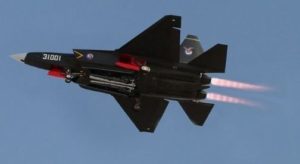
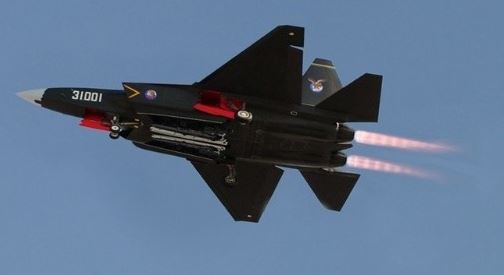
J-31 Gyrfalcon, A Supplement to China’s J-20 Against US F-22 and F-35 Fighters

The 16th Beijing International Aviation & Aerospace Exhibition was held from September 16th to 19th, and the large model of China’s J-31 “Gyrfalcon” stealth fighter was displayed, which is a fifth Generation Multi-Purpose Medium Fighter aiming at international market, a stealth fighter of the same generation as US F-22 and F-35 fighters.

According to information revealed on the expo, aerodynamic performance and stealth performance of Chinese J-31 (FC-31) stealth fighter exceed many traditional fighters, and its avionics system will also be upgraded.

Some other specification of J-31 fighter was also unveiled. The highest speed of J-31 stealth fighter is Mach 1.8, and the largest combat radius is 2000 kilometers, which meet demands for carrier-based aircrafts.

Besides, J-31 stealth fighters owns absolutely independent intellectual property, excellent composite combat performance, single-seat double-engine, twin vertical fin and flying tail, large S-type bending air inlets on two sides, and interior weapon cabins.

Chinese J-31 fighter

Like US F-22 and F-35 fighters, China’s J-31 stealth fighter also features high viability, low radar detectability and low infrared radiation, as well as outstanding electronic countermeasures and low vulnerability design. J-31 also has powerful target detecting capability and outer information composite ability, excellent situation awareness, information sharing ability, multi targets BVR attack, arge off-boresight launching all-round air combat ability, air-to-land and air-to-sea precise attack ability.

With multiple mature technologies, J-31 stealth fighter is expected to be launched for international market in five years, and become a mature and cheap fifth generation fighter by 2024, and thus replace JF-17 block 2 as an exporting fighter jet of China.

J-31’s developer AVIC also revealed that J-31 fighter will be very cheap, might be cheaper than the fourth generation fighters of the west, bad news for western countries.

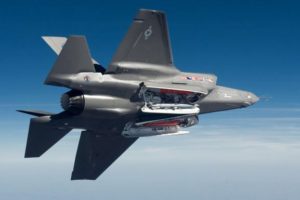
US F-35 fighter

German media reported that J-31 plagiarizes a lot of technologies of F-35 fighter, but Russian expert thinks J-31 is not a copycat of F-35.

J-31 fighter is now using Russian RD-93 engine, which will be replaced by homemade WS-13 upgrade version, and will have variants including carrier-based aircraft and fighter bomber.

In face of F-22 and F-35 stealth fighters of USA, China’s J-31 might enter service in 2020, and another stealth fighter of China J-20 owns long-range attach ability and can reach West Pacific. J-31 will be a supplement to J-20 fighter.

American officials think if China’s training, fighter amount, radar reliability and other airborne devices keep making progress, J-31 stealth fighter will soon exceed American main fighters – F-15 and F/A-18, and thus become a super weapon of China.

Monday, April 6, 2015

China’s Neutron Bomb: An Perspective Analysis Through West Hemisphere's Attitude

Why does China develop weapons systems that it opposes? China criticizes U.S. ballistic missile defense (BMD) systems, but conducted three BMD tests of its own from 2010 to 2014. China regularly supports a treaty to ban space weapons, but has repeatedly tested an anti-satellite (ASAT) system. It is also unclear how China’s nascent hypersonic glide vehicle (HGV), reportedly designated the WU-14, might fit into its military doctrine. In general, China’s rapid military modernization and opaque defense budget only exacerbate concerns over the compatibility between China’s stated views and actual practice in developing strategic weapons.

Mushroom cloud of nuke blast.
One way to answer this puzzle is to look at history, specifically the history of China’s neutron bomb program. From 1977 to 1988 China developed a neutron bomb, more formally known as an enhanced radiation weapon. Neutron bombs are specialized tactical nuclear weapons (TNW) with reduced blast effects and enhanced radiation. Similar to the BMD and ASAT puzzles, this weapon appears incompatible with China’s stated nuclear doctrine. China’s no first use doctrine emphasizes strategic forces and responding only to a nuclear attack, whereas a neutron bomb is tactical and ideal for first use against conventional forces.

The puzzle deepens because there is no evidence that China ever deployed a neutron bomb. Declassified U.S. intelligence and Chinese press reports indicate the PRC developed and tested this capability, but give no indication of deployment. The timing is odd too, as China was impoverished in the 1970s but still chose to develop an expensive weapon like the neutron bomb. It waited until 1988 to test a final design, after relations with the Soviet Union (the presumed adversary during the program) had improved.

My new National Defense University monograph uses primary sources such as biographies of Chinese nuclear weapons scientists, press reports, and technical articles to answer these questions. These sources allow us to reconstruct the neutron bomb program’s history and assess what drove decisions throughout the program. As a case study China’s neutron bomb program contributes to broader discussions about China’s weapons development decision making then and now.

Mushroom cloud of Neutron Bomb blast.

The neutron bomb case study suggests a model of a “technology reserve,” in which China develops a weapons technology to match the capabilities of another state, but defers deployment and keeps them in reserve. The longer report also considers how this model might apply to China’s decision-making on BMD, ASAT, and HGV systems. To assess the drivers behind Chinese decisions, the report uses five variables as an analytical framework:

1.     China’s strategic environment – What security concerns drove China’s decision to build a neutron bomb?
2.     The neutron bomb’s strategic value – How did Chinese leaders perceive the neutron bomb’s strategic value against likely threats?
3.     The neutron bomb’s normative value – Would a neutron bomb enhance China’s international prestige, or lead to opprobrium because of a taboo against the weapon?
4.     Resource demands – What were the political, financial, material, and personnel demands for this weapon?
5.     Technological feasibility – What were the challenges for developing and producing a neutron bomb, and how did Chinese scientists address them?

A final intervening variable is coalition politics. Champions and opponents of any weapons program can greatly affect decisions. In the case of China’s neutron bomb, General Zhang Aiping was a key advocate for the weapon. With these variables in mind, China’s neutron bomb program followed three stages.

1977-1980: Decision and Initial Research
In 1977 Chinese media followed the controversy over the U.S. decision to develop and deploy the neutron bomb in Europe. Soviet media denounced the U.S. neutron bomb as the “perfect capitalist weapon,” and pressed China to also condemn it. Instead Chinese media kept a neutral tone, making the Soviets more alarmed over Beijing’s “silence.” On September 21, 1977 Chinese General Zhang Aiping broke the silence with—of all things—a poem in the state-run newspaper People’s Daily:
Steel alloys are not strong, and
Neutron bombs are not difficult.
When heroes study the sciences intensely,
They can storm all earth’s strategic passes.
At this point Chinese leaders had already ordered initial research into the neutron bomb. Regarding their motivations, one scientist recalled Deng’s statement in 1966 “What others have already done, we also must do; what others have not yet done, we certainly must also do.” The message was clear—if other countries had the neutron bomb so should China. Some scientists initially opposed developing a neutron bomb, because they worried such a program would disrupt higher priority work in miniaturizing nuclear warheads for use on missiles. Ultimately they acquiesced, knowing they no longer held the same political clout they once had, and that Chinese leaders were prioritizing conventional instead of nuclear weapons.

1980-1984: Developing “The Second Generation of Light Boats”
In 1980 General Zhang Aiping told a member of a visiting U.S. delegation that China needed the neutron bomb against the Soviets. Chinese media also followed France’s neutron bomb development and considered it a symbol of the country’s “great power status” (大国地位). On a technical level, the weaponeers decided neutron bombs and miniaturized warheads (which they were already working on) shared enough common principles that they could combine the two programs into one. Doing so, they divided the neutron bomb problem into constituent parts, or “principles,” and solved them individually. From 1982 to 1984, China conducted five tests related to the ERW and warhead miniaturization.  These tests culminated in a successful “principles breakthrough” test on December 19, 1984, which one weaponeer described in a poem as “the second generation of light boats has passed the bridge.” It appears the “second generation” referred to neutron bombs and miniaturized warheads.

1985-1988: Pause and Reevaluation
In 1985 China halted nuclear testing for 30 months. The pause coincided with a Soviet moratorium on testing and a leadership reshuffle that neutralized neutron bomb proponent General Zhang Aiping. At this point France had also decided against deploying a neutron bomb, solidifying a taboo against the weapon. Nuclear weapons scientists were aware of the international and domestic political challenges to continuing their work. In 1986 they warned PRC leaders that the United States and Soviet Union could conclude a nuclear test ban treaty that would prevent China from modernizing its nuclear arsenal. They proposed accelerated testing to complete new warhead designs, effectively making a “now or never” argument. If China did not complete new warheads soon, it would be at a long-term disadvantage.

Chinese leaders approved the report, and on September 29, 1988, China successfully tested a neutron bomb design. Before doing so a senior weapons scientist Liu Huaqiu wrote two interesting reports. Liu argued China did not need a neutron bomb, but should test a design anyway to put in China’s “technology reserve.”           
          
Conclusions and Implications for Today
What produced the neutron bomb’s outcome of development without deployment, and to what extent do these variables apply today? Strategic concerns and PRC leaders’ desire to match capabilities were key to the initial decision. Zhang Aiping’s political rise and scientists’ “principles” approach sustained the program, but later a receding Soviet threat and Zhang’s retirement stalled it. Yet despite these setbacks, scientists’ argument of “now or never” compelled Chinese leaders to test a final design to keep in a “technology reserve.” The case study also helps frame analyses of other states’ nuclear weapons programs. For example, the scientists’ “principles” approach demonstrated how a state with limited resources may approach development of a complex weapon system.

This case study’s framework and final model are useful for discussions of China’s current weapons systems under development, such as its HGV. HGVs glide through the atmosphere at hypersonic speeds and could be more survivable against BMD systems. Possible drivers for developing this system include its strategic value if the PRC believes the system can defeat U.S. missile defense systems and the normative value of being first to develop an advanced system. Future analyses could include assessments of coalitions advocating the weapon and its technological principles. An immediate recommendation is that instead of panicking over such systems, such as Soviet media did in reaction to China’s neutron bomb, calmer assessments are more constructive.

The longer report covers in greater detail the variables, program specifics, personnel, and conclusions. A good final note here concerns methodology on two fronts. First, the analytical framework of variables facilitates the systematic assessment of drivers throughout the program, and is useful for contemporary analysis of other advanced weapons programs. Second, Chinese primary sources ranging from biographies to social media can be incredibly valuable for deciphering China’s decisions on weapons programs. These points should be useful for today’s China hands and nuclear wonks tackling other security puzzles.
By: Jonathan Ray

Saturday, September 13, 2014

PLAN's Next Generation Type 055 Class Guided Missile Destroyers

Next Generation Type 055 Class Guided Missile Destroyers are being developed for the Peoples Liberation Army Navy (PLA Navy). 
 
 
The Type 055 will be able to carry new generation of Chinese multi-module active phased array radar, electronics to support self-defense, anti-air warfare (AAW) and anti-ship/land-attack missions. The Type 055 is estimated to displace around 10,000 tons.


Monday, January 20, 2014

China's Military Buildup Could Push USA Out Of Asia

hinese government announced an increase of nearly 13 percent in its defense budget over the previous year. Officially, the defense budget stands at slightly more than $91 billion--a sum now second in the world only to what the United States spends on its military.

This is only the "official," declared budget. China's real expenditures for military affairs are far greater, with jets and ships it buys from Russia, its research and development programs, and its strategic weapons all "off the books."

Moreover, if one factors in the vast difference in what it costs to field and pay for the average member of the Chinese military versus those same costs for an American serviceman or woman, the "price-adjusted" Chinese military budget may approach $300 billion.

While this figure is at best an estimate and still clearly smaller than what the United States spends on defense, America's edge in spending does not necessarily translate into clear military pre-eminence in Asia.

The U.S. military has global tasks and responsibilities, while the vast majority of China's defense expenditures goes toward building up a capability in this one specific but vital region of the word.

So what has China gotten for its money after two decades of double-digit increases in military spending? The short answer is a change in the East Asian military balance.

In 1996, President Clinton sent two American aircraft carriers into the waters off of Taiwan in response to a series of missile tests and military exercises by the Chinese designed to intimidate Taiwan as its 1996 presidential election approached.

He did so confident that U.S. naval power was sufficient to control any crisis and deter further Chinese attempts at military coercion. Today, faced with a Chinese arsenal of new planes, ships, submarines, and missiles, no American president could act with such surety.

Of course, it wasn't supposed to be this way. Chinese leaders have long emphasized that Beijing's "rise" would be "peaceful." Alas, the nature of the Chinese military buildup poses the single most dangerous challenge to the security of the Asia-Pacific region since that of Imperial Japan. China's huge missile arsenal, in particular, is extremely destabilizing.

Nor was this new military imbalance supposed to happen so rapidly. Until recent years, U.S. defense officials and senior commanders have been pooh-poohing the Chinese modernization efforts.

Now Adm. Robert Willard, head of U.S. forces in the region, says his command must "step up efforts to maintain regional stability" in response to "China's immense presence in the Pacific Ocean." He recognizes that U.S. military supremacy, the defining characteristic of the regional security architecture, is open to question.

Yet, it is far from clear that Willard will have enough forces, or the right kind of forces, to maintain stability. The U.S. Navy has shrunk to less than half its 600-ship, Reagan-era peak, while the Air Force's F-22 procurement--and the Raptor would be a key trump card in offsetting the advantages China realizes with its missile force--was ended with the purchase of just a quarter of the planned number of jets.

China also presents a challenge to U.S. advantages in space, on which all American forces depend, and in "cyberspace."

Indeed, no one has been more heartened than strategists in Beijing by the U.S. defense budget cuts of recent years that have eliminated more than $325 billion in weapons modernization.

And with the congressional Republicans seemingly poised to reduce the Pentagon budget requests even further, the Chinese are happy to let nature take its course.

But if history teaches us anything, it is a course likely to incur greater costs down the road for both the United States and its allies.