Showing posts with label UK. Show all posts

Tuesday, November 17, 2015

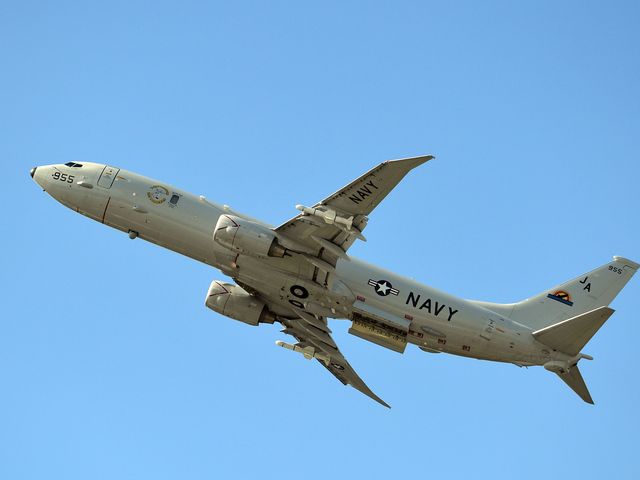
Lockheed Pitches C-130 To UK As Alternative to P-8

As the UK considers how to fill its maritime surveillance gap, Lockheed Martin is pitching a modified version of its C-130 multi-mission aircraft as a cheap alternative to Boeing’s costly P-8 Poseidon.

The UK is currently weighing whether to buy the P-8 after the 2010 Strategic Defence and Security Review scrapped plans to buy BAE Systems’ long-delayed Nimrod MRA4 jet. With the release of the new SDSR just a few weeks away, Lockheed representatives told reporters Nov. 9 the company could modify the UK’s 10 existing C-130s to fulfill the submarine-hunting mission at significantly lower cost.

Lockheed pitched the idea to the UK Ministry of Defence about 18 months ago, according to Peter Ruddock, business development director for the company’s UK contingent. Lockheed has done 90 percent of the work necessary to repurpose the aircraft to fit the maritime surveillance mission, he said. The last piece of the puzzle is integrating the submarine-hunting torpedoes onto the aircraft, a project company engineers are currently working.

Lockheed’s solution will be about 40 percent of the price of the competition, Ruddock said, estimating that the team could get the first four aircraft to full capability in just 41 months.

Lockheed is proposing equipping the UK’s existing C-130 with the mission system developed for the Merlin naval utility helicopter, which is capable of anti-submarine warfare and medium-lift transport, Ruddock said. Lockheed would equip the aircraft with submarine-hunting torpedoes, as well as sonobuoys and life rafts. The aircraft also has advanced EO/IR sensors to detect hostile submarines, he said.

The project also would create jobs in the UK, as 80 percent of the work could be done in-country, Ruddock said.

“We’re not knocking the P-8,” Ruddock said. “I think what we are saying is we can give you P-8-type capability at a much lower cost point because you already have the airframe.”

The UK MOD “rigorously” examined Lockheed’s proposal, and concluded that the project is “credible,” Ruddock said. However, he emphasized the government has not yet set its new requirement or placed any orders for Lockheed’s proposed planes.

On the other hand, Boeing officials say the P-8 is a more cost-effective solution for the UK at the end of the day.

The cost of the P-8 has come down 30 percent, James Detwiler, Boeing’s director of business development for maritime programs, told Defense News on Monday. It is 75 percent cheaper on a cost-per-hour basis to operate the P-8 than the legacy aircraft it is replacing, he said. Additionally, he said, if a foreign nation coordinates its buy with the US Navy’s, both can benefit from the economy of scale.

Many nations are finding that reconfiguring existing aircraft for maritime patrol is actually cost prohibitive, Detwiler said .

Fred Smith, Boeing’s director for global sales and marketing, said the P-8 is cost effective and low risk. However, he acknowledged certain countries that don’t need anti-submarine warfare capability might choose Boeing’s smaller, cheaper Maritime Surveillance Aircraft.

The P-8 is not the right solution for every country, he said during a briefing at the air show.

“We know there is a set of countries that need to do long-range, armed, anti-submarine warfare … they need to protect their strike groups, their carrier battle groups, they need to project power, they need to defend their territories at sea and beyond,” he said. “There are other customers that are looking for other capability, non-anti-submarine warfare, non-armed capability, and we have that on our Maritime Surveillance Aircraft.”

Boeing anticipates selling 100 aircraft internationally over the next ten years, Smith estimated.
Thursday, April 3, 2014

Brimstone and Tornado GR4: Fits With Fates


Brimstone GR4 Possible Carriage Configuration

BRIMSTONE on Tornado GR4

Cropped Tornado GR4 with Brimstone and ASRAAM

MBDA's Brimstone Aboard on "REAPER"


Brimstone

BRIMSTONE substantially increases persistence through single shot precision, 3 missile per pylon aerodynamic fit, and fast-jet qualified levels of environmental robustness.
Training Missile BRIMSTONE on left
Reaper brimstone view_1
Reaper brimstone view_2
Reaper brimstone view_3
Reaper launched Dual Mode Brimstone intercepting 50 mph target
Reaper launched Dual Mode Brimstone intercepting 70 mph high speed crossing target
BRIMSTONE 70 mph Inert TOM No warhead
Dual Mode Brimstone hitting 70 mph high speed crossing target
Dual Mode Brimstone hitting 50 mph target
BRIMSTONE Post Impact Still 1
BRIMSTONE Post Impact Still 2

MBDA's Air-to-Ground Missile(AGM) System "Brimstone"

Brimstone is an air-launched ground attack missile developed by MBDA for Britain's Royal Air Force. It was originally intended for "fire and forget" use against mass formations of enemy armour, using a millimetre wave (mmW) seeker to ensure accuracy even against moving targets. 

Brimstone GR4 Possible Carriage Configuration

Experience in Afghanistan led to the addition of laser guidance in the dual-mode Brimstone missile, allowing a "man in the loop" to pick out specific targets when friendly forces or civilians were in the area. 

The Tandem Shaped charge warhead is much more effective against modern tanks than similar weapons such as the AGM-65G Maverick, whilst the small blast area minimises collateral damage. Three Brimstones are carried on a launcher that occupies a single weapon station, allowing a single aircraft to carry many missiles.


After a protracted development programme, single-mode or "millimetric" Brimstone entered service with RAF Tornados in 2005, and the dual-mode variant in 2008. The latter has been extensively used in Afghanistan and Libya. 

An improved Brimstone 2 was expected to enter service in early 2015, but has been delayed. MBDA is working on the targeting of swarms of small boats under the name Sea Spear. The RAF are waiting for funding to fit Brimstone to their Eurofighter Typhoons and planned to integrate it with their Harriers until they were withdrawn from service in 2010. 

MBDA are studying the use of Brimstone on ships, attack helicopters, UAVs and from surface launchers; it will be integrated on the F-35 Lightning II when the F-35 enters British service. The US, France and India have expressed interest in buying Brimstone for their aircraft but Saudi Arabia is the only export customer to date.

MBDA unveils the MARTE COASTAL DEFENCE SYSTEM at DIMDEX 2014

At the DIMDEX exhibition in Doha, Qatar (25-27 March 2014), MBDA is presenting for the first time ever a new coastal defence system based on the Marte missile family. This system, the Marte Coastal Defence System (MCDS), guarantees maritime coastal traffic surveillance and interdiction to hostile ships in territorial waters.

Michele Di Nunzio, anti-ship missile expert at MBDA, introduces the Marte Coastal Defence System during DIMDEX 2014.

The System is Capable of:

» monitoring and picturing sea communication lines;
» detecting and identifying hostile vessels through the use of active surveillance equipment;
» receiving target data via data-link;
» neutralising hostile vessels by using a new generation of anti-ship missiles.

The MCDS is available with different and flexible configurations depending on customer requirements. This system can operate in either a stand-alone mode or integrated within an existing surveillance radar network. 

At the DIMDEX exhibition in Doha, Qatar (25-27 March 2014), MBDA is presenting for the first time ever a new coastal defence system based on the Marte missile family.

In addition, MBDA can offer two different missile options for MCDS; the Marte MK2/N for the control of brown waters and Marte ER, for the control of a more expansive sea area.

The System Configuration Consists of:

» a Command and Control (C2) module, comprising an ISO standard 12 foot shelter that can be connected via data-link with the upper level surveillance system. This module includes consoles to manage the local picture provided by its own radar (stand-alone mode) or to track targets provided by the upper level surveillance system (integrated mode).

» a launcher module, comprising up to four firing units that can be mounted on ISO standard trucks. Each launcher can deploy up to four missiles.

» a logistics module, comprising a logistic and support vehicle, plus a variable number of reloading vehicles.


The all-weather Marte MK2 is a fire-and-forget, medium-range, sea-skimming anti-ship weapon system. The new version of the missile, called Marte ER (Extended Range), keeps the basic characteristics of the Marte family, but extends its range.

The Marte Missile Family

The all-weather Marte MK2 is a fire-and-forget, medium-range, sea-skimming anti-ship weapon system. It is equipped with mid-course inertial and radar-based terminal guidance and is capable of destroying small craft and seriously damaging larger vessels. The missile weighs 310 kg and is 3.85 metres long. Marte was first developed in the 1980s with the 30km range MK/2 version being deployed on helicopters. Subsequent models followed for integration on different platforms and thus a family of missiles came into being.

The Marte MK-2/S, where “S” stands for “Short” and indicates shorter munitions in order to enable simpler on board integration, has already been integrated on AW101 and NH-90 NFH helicopters (Naval/Nato Frigate Helicopter) in service with the Italian Navy. The Marte MK-2/A was then developed for launch from fixed-wing aircraft (fighter or patrol aircraft). Finally, in response to the growing interest for a lightweight, rapid-response surface-to-surface naval missile system for littoral operations, Marte MK2/N was developed.

The new version of the missile, called Marte ER (Extended Range), keeps the basic characteristics of the Marte family, but extends its range. The new product is different from previous versions thanks to two main features: turbojet propulsion (leading to a four-fold increase in range compared to the rocket motor version), and the new ISO-calibre cylinder cell. The missile, equipped with these new important components, still preserves a series of elements that were already present in previous versions of the Marte missile, providing a number of significant commonalities that are widely appreciated by the market.

Thanks to these improvements, the new missile has a range that now exceeds 100 km and a much increased speed, both in the cruise and final attack phases. However, it is shorter than the previous model. Logistic systems, such as the transport and stocking canister in the helicopter version and the trolley for moving and hooking the missile to aircraft, are the same as those used in the Mk2/S model, offering clear user advantages.

Sunday, March 30, 2014

MBDA to Develop FASGW(H)/ANL: The Next Generation ANGLO-FRENCH Anti-Ship Missile

This new programme will lead to shared centres of excellence between both countries.

MBDA welcomes the signature of the Demonstration and Manufacture contract for the FASGW(H)/ANL (Future Anti Surface Guided Weapon (Heavy)/ Anti Navire Léger) missile on 26th March 2014. This jointly funded Anglo-French contract, valued at more than £500 million (€600 million) has been awarded to MBDA by the UK DE&S (Defence Equipment & Support) on behalf of the French and UK MODs and will be managed as part of MBDA’s Team Complex Weapons Portfolio. The work will complete the joint assessment and missile design work funded by the two nations in cooperation since 2009.

By working in concert and bringing together their respective strengths, Britain and France will not only achieve a more cost effective solution to their military needs, they will also help to strengthen MBDA’s position in confronting worldwide competition. Similarly this will also benefit the capability and export potential of those European helicopter platforms which will integrate the FASGW(H)/ANL system over the coming years.

Antoine Bouvier, CEO of MBDA said: “This programme initiates a new era of cooperation that will allow significant efficiencies on future programmes. Instead of combining their efforts programme by programme, as has been the case up to now, France and the UK will coordinate their development and acquisition approach to eliminate duplication in the missile sector. The benefits in terms of competitiveness and performance, which MBDA has already demonstrated with its principal cooperative programmes (Aster, Storm Shadow/SCALP, Meteor), will accrue in due course to more and more of our French and UK products. A decisive step has been made towards the reinforcement and sustainability of the missile industry sector in Europe. This development also ensures a long-term commitment to our armed forces customers with regard to their security of supply based on mutual access to sovereign technologies”.

FASGW(H)/ANL will equip the Royal Navy’s AW159 Lynx Wildcat helicopters and the French Navy’s maritime helicopters. Weighing around 100kg, this modern primarily anti-ship missile will destroy from safe stand-off ranges vessels ranging from FIAC (Fast Inshore Attack Craft), through medium sized FAC (Fast Attack Craft) up to large vessels such as Corvettes. This missile also has a surface attack capability against coastal and land targets.

This joint programme will deliver an enhanced capability to replace existing and legacy systems such as the UK-developed Sea Skua and the French-developed AS15TT anti-ship missiles. It also puts into practice the new cooperative principles agreed by France and the UK during the summit meetings held between the countries’ governments in November 2010, February 2012 and the Brize Norton summit on the 31st January 2014. These principles extend to the creation of Centres of Excellence common to the two countries. While optimising operational efficiency at the industrial level, this approach will also preserve the technology sovereignty of both countries.

Suitable for both blue water and cluttered littoral operations, FASGW(H)/ANL represents a major advance from a technological standpoint. This new system provides very precise effects against a wide range of threats, even in complex environments, thus satisfying a recognised and common future need. A high speed, two-way data-link communicates the images “seen” by the missile’s seeker to the operator, who, in addition to initiating an autonomous engagement, can alternatively remain in control of the missile throughout the full duration of its flight. This optional, man-in-the-loop, monitor-and-control facility, enables new capabilities such as: in-flight re-targeting; final aim point correction and refinement; or safe abort. Ultimately, the missile will be able to engage targets situated out of direct line of sight when the launch platform is able to benefit from third party target designation techniques, for example laser illumination.

Tuesday, March 11, 2014

NATO aircraft to monitor Ukraine crisis

Alliance to deploy reconnaissance aircraft over Poland and Romania to monitor situation in neighbouring country. 

NATO aircraft to monitor Ukraine crisis
NATO has said it will start reconnaissance flights over Poland and Romania to monitor the situation in neighbouring Ukraine where Russian forces have taken control of Crimea.

The AWACS (Airborne Warning and Control System) flights will take place solely over NATO territory, the alliance said on Monday.

Ukraine is not a NATO member but Russia's intervention in Crimea has alarmed neighbouring countries, including alliance members that used to be dominated by the Soviet Union.

The announcement comes as the United States is sending a dozen F-16 fighter jets and 300 service personnel to Poland as part of a training exercise.

The US and Russia are bitterly divided over how to ease the crisis, with each challenging the other to show they are really interested in a peaceful outcome.

Russia denounced alleged lawlessness by far-right activists in eastern Ukraine on Monday, in a statement likely to trigger fear in Ukraine over possible Russian intervention.

The Russian Foreign Ministry said it was outraged by lawlessness in the country’s east, blaming the group Right Sector for "conniving" with the new government in Kiev.

Right Sector is a grouping of several far-right and nationalist factions who were actively involved in the uprising against Moscow-backed President Viktor Yanukovich.

The movement uses swastika signs, is blamed for various attacks, and according to its leader Dmitro Yarosh, has “enough weapons to defend all of Ukraine”. 
 
Its activists were among the most radical and confrontational of the demonstrators in the Ukrainian capital, Kiev, and organised “self-defence” brigades for the protest camp.

Witnesses in eastern Ukraine told Reuters news agency that tensions had been fuelled by pro-Russian activists to provide Russian President Vladimir Putin with a justification for invading Ukraine to protect Russians. 


NATO Force
Pro-Russia sentiment is at a high and there are fears Russia could seek to incorporate that area as well.

Violence against Russians


A referendum has been called in Crimea for March 16 on whether the region should split off and seek to become part of Russia.

Russia has criticised the West for being silent over violence and detentions taking place against Russians, highlighting the attack on a pro-Moscow demonstrators in the eastern city of Kharkiv on March 8 and the detention of Russian journalists.

"The shamefaced silence of our Western partners, human rights organisations and foreign media is surprising. It raises the question, where is the notorious objectivity and commitment to democracy?" it said.

Ukraine's government and Western leaders have accused Russian officials and media of distorting the facts to portray the protesters who Yanukovich's rule as violent extremists.

On Wednesday, Ukrainian Prime Minister Arseniy Yatsenyuk will be received in Washington by President Barack Obama.

Obama has warned that the March 16 vote in Crimea would violate international law. But on Sunday, Putin made it clear that he supports the referendum, in phone calls with German Chancellor Angela Merkel and British Minister David Cameron.

“The steps taken by the legitimate leadership of Crimea are based on the norms of international law and aim to ensure the legal interests of the population of the peninsula,” said Putin, according to the Kremlin.

Putin has refused to have any dealings with the new Ukrainian leaders who replaced fugitive pro-Kremlin Yanukovich.

Tuesday, January 21, 2014

First Saudi Typhoon Aircraft Rolled Out


The Roll Out Ceremony for the first two Typhoon aircraft constructed for the c was held at BAE Systems' Warton site yesterday.

The ceremony, which was attended by the Saudi Assistant Minister of Defence and Aviation, His Royal Highness Prince Khalid Bin Sultan bin Abdul Aziz Al Saud, representing the Saudi Deputy Prime Minister and Minister of Defence and Aviation, His Royal Highness Crown Prince Sultan bin Abdul Aziz Al Saud, and the Minister for the Armed Forces, Mr Bill Rammell, representing the Secretary of State for Defence, included a fly past by one of the RSAF Typhoons.

This represents another significant stage in the progress of the Salam Project, which covers the supply of 72 Typhoon aircraft tothe Royal Saudi Air Force in accordance with the Understanding Document signed by both Governments.

The Minister for the Armed Forces, Bill Rammell, said:

"This ceremony is a very significant milestone for the Salam Project. The Royal Saudi Air Force is getting a fantastic aircraft. Typhoon is a world-class, multi-role aircraft and will provide the RSAF with the defence capability it needs to meet the defence challenges oftoday and for the foreseeable future.

"The industrial benefits of the Project are also substantial for both nations and will help to sustain several thousand, skilled jobs in the UK and Saudi Arabia over the next ten years."
Background Information

The Governments of Saudi Arabia and the UK signed a formal understanding in 1985 for the supply of Tornado IDS, Tornado ADV, Hawk and PC-9 aircraft, together with associated support services, equipment, weapons, ammunition and electronic warfare systems; the aircraft have all since been delivered.

The two governments signed a Memorandum of Understanding (MOU) in 1986 elaborating the arrangements put in place the previous year. This formalised the role of British Aerospace (BAe) (as it was called at the time) as the main contractorfor the whole programme, and established a UK Ministry of Defence (MOD) Project Office then within the Defence Export Services Organisation (DESO) to coordinate the activities of UK MOD in support of the programme, and to monitor the contracted activities of BAe. The two governments signed the "New Buy Tornado Agreement"for the supply of additional Tornado IDS aircraft in 1993.

On 21 December 2005 the then Secretary of State for Defence, Dr John Reid, signed an Understanding Document which was intended to establish a greater partnership in modernising the Saudi Arabian Armed Forces and develop close service-to-service contacts, especially through joint training and exercises. Under the terms of the document it was agreed that Typhoon aircraft would replace Tornado ADV aircraft and others currently in service withthe Royal Saudi Air Force. BAE Systems would also invest in local Saudi companies, develop an industrial technology plan, and provide suitable training for thousands of Saudi nationals providing through life support for key in-service equipments.
On 17 September 2007, the Governments of Saudi Arabia and the UK announced that agreement had been reached on the sale of 72 Typhoon aircraft. This new defence cooperation programme, which has been designated the Salam Project, will eventually be supported by substantial logistical and training packages. The final details of these support packages are still subject to further discussion between the Governments, but limited aircrew and technician training has already started inthe UK in preparation for the delivery of the first Typhoon aircraft to Saudi Arabia later this summer. The Roll-Out ceremony marks the beginning of the delivery stage of the Salam Project.

Role of UK MOD: The 1986 MOU requires the UK Government to ensure that all equipment, spares, training and technical work supplied by the main contractor (BAE Systems) are in accordance with Saudi requirements. This requirement will continue for the Salam Project. BAE Systems' performance in meeting requirements is monitored by the MoD's Director General Saudi Armed Forces Project (DGSAP) and his staff, based in London andSaudi Arabia.

Monday, January 13, 2014

UAE decides against Typhoon

 
Official Eurofighter logo

The United Arab Emirates has chosen not to purchase Eurofighter Typhoon combat aircraft despite high-level talks between UK and UAE officials, according to BAE Systems.
 
An RAF Typhoon in flight

“The UAE have advised that they have elected not to proceed with these proposals at this time,” says a 19 December media release from BAE.

“BAE Systems and the UK government have been in discussions with the government of the United Arab Emirates regarding a range of defence and security capabilities, including the potential supply of Typhoon aircraft,” BAE adds.

Typhoon was seen as a challenge to France’s Dassault, which for years has been seeking to sell its Rafale fighter to the UAE.
 
German ground crew mount an IRIS-T to a Eurofighter

But two years ago on the day before the Dubai air show, news broke that the UAE had asked the Eurofighter consortium to submit a proposal.

BAE’s media release says “all parties have invested significant effort in drawing up Typhoon proposals for the UAE.”

“Recognising the risk, scale and complexity of such a transaction, the group had not built this prospect into its planning assumptions,” it adds.

Monday, August 5, 2013

United Kingdom: F-35 or F-22?


As the unit procurement costs of the F-35 Joint Strike Fighter progressively converge with the unit costs of the F-22A Raptor, and the F-35 becomes progressively less survivable as threats evolve, it is time for the UK to cut its losses, bail out of the JSF program, and opt for the F-22A instead. A US Air Force study published in 2000 identified Britain as one of three allies who could be supplied the F-22 without any risk of technology leakage (Author).


The F-35 Lightning II Joint Strike Fighter is designed to defeat threats that will have been superceded well before this aircraft enters operational service. The performance of the F-35 is suffering seriously from the conflicting design requirements that it was intended to meet. As a result, the F-35 is shaping up to be a technological failure, a delivery schedule and 'affordability' failure, and a techno-strategic failure. This will place Britain in the position of having to look at replacement options, which are extremely limited in view of developing threat capabilities. The question that must inevitably arise is: 'Should Britain Ask the United States for the F-22?'

Britain remains the largest single overseas partner in the F-35 program, and as this program unravels, Britain stands to lose much more than the other partner nations in a sunk investment not producing any direct return, and in political embarrassment. From a political perspective, America needs to start thinking about what alternatives it can offer the British as credible substitutes for the uncompetitive and technically troubled F-35. The F-16E, F/A-18E/F and F-15E/SG do not qualify as credible substitutes given the proliferation of high technology Russian designed Flanker fighters and double digit SAMs on the global stage. None of these types can survive in such an environment.

Britain’s intent to procure the expensive and underperforming F-35 for the Royal Air Force and Royal Navy has produced intensive domestic criticism, some well informed and technically correct, some less so. What is clear however is that Britain does need new technology fighters to replace a range of increasingly less viable legacy aircraft, as well as the Royal Navy’s now retired Sea Harriers.

About a decade ago the F-22A Raptor was proposed as an alternative to the domestically built Eurofighter Typhoon. Britain’s influential aerospace industry lobby killed that proposal, rubbishing the F-22 with some very dubious DERA JOUST simulations, which claimed the “Typhoon was 81 percent as good as an F-22”. Forensic analysis showed this was nonsense, an assessment since then borne out by the operational experience of the US Air Force flying the F-22 against a range of conventional fighters.

Current planning for the Royal Air Force and Royal Navy is to procure the F-35B STOVL JSF as a replacement for the RAF Harrier GR.7/9 fleet, the Jaguar GR.3, retired in 2007, and the Royal Navy Sea Harrier FA.2, retired in 2006. Cited numbers vary between 150 and 138 aircraft, although reports emerging from the UK late last year suggested a reduction to as few as 85 aircraft. This is a far cry from the euphoric speculation of early 2002, when senior RAF staff officers privately suggested to their Canberra colleagues that the RAF should be replacing its remaining Panavia Tornado GR.4s, Tornado F.3s, and earlier built Typhoons, with the F-35A JSF. Over the next two decades Britain will need to replace most if not all of its combat aircraft with credible new technology replacements. The only new fighter in the UK inventory is the Typhoon F.2, which is technologically comparable to currently built American F-15 and F/A-18E/F fighters. While more agile than these legacy US fighters, it is equally vulnerable to advanced SA-20/21/23 Surface to Air Missile systems, and new generation Su-35BM class Flanker variants. The new ramjet MBDA Meteor Air to Air Missile may eventually provide a credible capability against older Flanker variants, but will be matched over the next decade by the Russian ramjet Vympel RVV-AE-PD missile. The Typhoon has been justifiably criticised for program procurement costs which have been similar in magnitude to the vastly better F-22 Raptor.
 
The Royal Air Force will need replacements for the Tornado IDS (above) and Tornado ADV (below), capable of penetrating advanced air defences and defeating Su-35BM class fighters. The F-22A can perform both roles better than any other design planned or in service (RAF image).
  
The Typhoon F.2 is one of the most expensive fighters ever built, but lacks the stealth to penetrate modern SAM defences, and the persistence to compete with the latest Su-35BM class Flanker variants (MBDA image).


The F-35B is intended to replace the Harrier GR.9 (below) and already retired Sea Harrier FA.2 (above). With Britain's planned new carriers to be much larger than the Invincible class, and the ubiquity of modern Intelligence, Surveillance and Reconnaissance systems rendering dispersed basing almost irrelevant, there is not a compelling case for a STOVL aircraft to replace the Harrier variants (Royal Navy images).


Britain’s long term strategic needs have been the focus of much of the criticism directed at re-equipment plans for the UK fighter fleet. Sadly much of this criticism has been myopic, concentrated on short term considerations relating to Counter INsurgency Operations (COIN) in the Islamic world. In this respect Britain has suffered from the same nonsensical very short term argument seen in the United States, and Australia.

There is little doubt that over the long term Britain will need to provide some credible expeditionary capabilities to support coalition operations on the global stage. While another Falklands scenario is unlikely, given the loss of Britain’s overseas colonies, the need to intervene globally is unlikely to vanish. If future UK governments intend to contribute capabilities of any real use, they will need systems which are effective and survivable against the modern Russian high technology systems proliferating globally, and also interoperable with other coalition assets. Systems which soak up US forces as protective escorts to stay alive are more of a hindrance in a coalition campaign, than a contribution of value.

What should be of more concern to Britons are the increasingly toxic relationships between Putin’s Russia and the many former Soviet Republics, and former Warsaw Pact allies in Eastern Europe. Putin’s confrontational and coercive foreign policy and military interventions along Russia’s exposed Western and South Western borders have fuelled mistrust and resentment in nations which were already largely resentful over Soviet era misdeeds. The expansion of NATO eastward has been a by-product of this progressive breakdown – not vice versa as is often claimed. Russians feel exposed without hundreds of kilometre deep buffer territories and this perceived vulnerability with its resulting fears will not disappear any time soon.

While Putin’s Russia will never be another Soviet Union, Russia is slowly recapitalising its Cold War era military with advanced systems, and will have a genuine capability to project coercive air power against European NATO nations. If any of the myriad ongoing disputes between Russia and its now NATO aligned neighbours degrade into shooting conflicts, the Russians will be able to drop smart bombs across much of Eastern Europe, unless the US Air Force deploys most if not all of its F-22 Raptors into European NATO airfields. Moreover, as Russia builds up numbers of the SA-21, it will be able to declare and effectively enforce permanent air exclusion zones up to 200 nautical miles outside its geographical borders – a Surface-to-Air-Missile-based buffer zone that would appeal to Russian fears of being subjected to attack by cruise missiles and conventional aircraft.

European NATO nations can look forward to the prospect of Moscow not only turning off the gas supply, but also exercising military muscle in NATO’s backyard. The expectation that the Americans will permanently commit their already overcommitted future F-22 fleet to cover for European military underinvestment is clearly asking a little too much and, at best, fanciful thinking.

It is worth observing that the character of developing Russian capabilities is very different from the Cold War era Soviet model. Rather than the vast numbers of mostly unsophisticated shorter ranging dumb bomb armed tactical fighters the Soviets deployed, Russia is emulating the US model of smaller numbers of highly sophisticated high technology long range aircraft armed with precision smart weapons. Large numbers of low performance fighters, including the F-35, are virtually useless against Russia’s new generation Su-34 and Su-35BM fighters.

While the broader issues of European NATO security are bigger than Britain’s needs alone, they underscore the realities of an uncertain future in a complex multipolar world.

Technological evolution and poorly thought out specification/definition of the F-35 design has seen to it that by the time the F-35 would deploy, assuming it survives its engineering, cost and schedule problems, the F-35 will be wholly uncompetitive against the new generation of Russian designed weapons. That margin will grow as Russian and Chinese weapons evolve over the next three decades, while the overweight, underpowered, over-packed and under-stealthed F-35’s built in design limits make it increasingly outmatched.

Whether Britain wishes to conduct expeditionary warfare in coalition or unilaterally, or participate in European NATO continental defence, its Eurofighter Typhoons and planned F-35 JSFs will likely be fodder for the latest Russian weapons, unless the opposing side is an undeveloped Third World nation. The prospect of Russian contractor (i.e. mercenary) aircrew, ground-crew and missileers being deployed to Third World nations with the available cash introduces uncertainties even in the latter circumstance. It has happened before.

The wisest strategy for the United Kingdom is to negotiate access to the F-22A Raptor and bail out of the F-35 program at the earliest. An even wiser strategy is to collaborate with the Americans on the development of a navalised F/A-22N Sea Raptor, to drive down costs for the US Navy, Marine Corps and Royal Navy. The uncompetitive Typhoon can be relegated to air defence of the British Isles, and F-22A and F/A-22N used for expeditionary warfare and NATO air defence commitments on the continent.

While much has been said and written about not exporting the F-22 to US allies, what is less well known is that two studies have been done to determine exportability of the F-22.

The first of these is the public unclassified geostrategic and political assessment performed by then LtCol Matthew Molloy, USAF, who produced a 98 page study while posted to the Maxwell AFB School of Advanced Air Power Studies of the Air University, in 1999-2000. This document identifies Australia, Britain and Canada as the three US allies who can be trusted without question to operate the F-22 and protect its technology.

Less well known is a more detailed and not publicly released study performed by the US Air Force during the same period, often known as the “anti-tamper study”, which looked at risks arising from downed aircraft scenarios. The study also assessed the risks arising in exporting the aircraft to close allies, specifically Australia, which was known to have a developing strategic need for the F-22. The study concluded that it was safe to supply the very same configuration of the F-22 flown by the US Air Force to Australia, as the risks of unwanted technology disclosure were no different to those expected for the US Air Force.

Considering both the Molloy study and the “anti-tamper” study, the notion that the Americans would not export some configuration of the F-22 to the United Kingdom is difficult to accept.

The problems, which the Britons must confront at a strategic level arising from Russia’s devolving relationships with its neighbours, and the ongoing demand for global intervention forces, are problems to a greater or lesser degree shared by other leading European NATO nations. The difficulties arising from involvement in the ill considered F-35 program are also shared by a number of other European NATO nations, as well as the United Kingdom.

The unavoidable strategic reality is the European NATO nations will need a credible capability to discourage adventurous future Russian behaviour in Eastern Europe, and to make a useful difference in expeditionary warfare. None of the indigenous European fighters, or the F-35, will be particularly useful in either kind of contingency. Two to three full strength Fighter Wings comprising 50 to 70 F-22 Raptors each would provide enough deterrent capability and sustainable / survivable firepower to address Europe’s needs for decades to come.

While the NATO AWACS fleet model of a shared resource would be a politically attractive way for Europe to deploy an export configuration of the F-22, it would present practical operational problems.

The United States needs to think long and hard about how to redress Europe’s worsening strategic weakness, as it has the potential to soak up disproportionate US military resources in any serious contingency. Exporting a variant of the F-22 rather than the uncompetitive F-35 would solve much of that problem.

With the long term future of the F-22 now the subject of intensive political, public and analytical community debate in America, and the F-35 Joint Strike Fighter now showing the symptoms of an incipient technological “death spiral”, the time is right for the Obama Administration and H.M. Government to jointly explore the export of F-22 Raptor variants for the Royal Air Force and Royal Navy, as an “escape strategy” from the F-35 program.

There is a good precedent: when it became clear that the Nimrod AEW.3 could not be made to work in a reasonable timescale and cost, H.M. Government cut its losses, dumped the program and promptly acquired the top tier Boeing E-3D AWACS instead.


The basic strategic challenges both America and Britain face are much the same, whether we consider European NATO contingencies, or expeditionary warfare. The Alliance relationship is as close as it has ever been. All that is needed is the political courage and strategic foresight to make a break from the past, well intentioned but fundamentally flawed, choice of the F-35.