Showing posts with label World. Show all posts

Saturday, August 30, 2014

Happy Victory Day, Turkey!

The August 30 Victory Day, the anniversary of Turkish victory over Greek forces in the war of independence 92 years ago, symbolizes the power of the Turkish nation in overcoming obstacles with the spirit of brotherhood, said Turkish President Recep Tayyip Erdogan. 
 Happy Victory Day
Emphasizing August 30 was the day on which the Turkish lands were entirely cleared from the enemies, President Erdogan said in his Victory Day message on Friday: "Our mighty nation did not stray from its path and did not allow any harm to its existence.
Turkish President Muhammed Recep Tayyip Erdogan

"Thanks to the fact that our nation still shows the same determination, we now have the pride of living in a country that has broken all types of tutelages," he added.


30th August, Victory Day, is also the Turkish Armed Forces (TSK) Day!
Erdogan's election is the first by popular vote in Turkish history. On Thursday, he wrote in the notebook of Anitkabir, the mausoleum of Turkey's founder Mustafa Kemal Atatürk: "After your passing, the bonds between the republic and the president's office have weakened." The victory on August 30, 1922, over the Greek military was the last big engagement between the two armies.
Thousands of Atatürk fans are gathered at Anıtkabir, the site of Atatürk's mausoleum in Ankara.


Monument of Dumlupınar Battle mausoleum
The war began with the Greek invasion of Izmir in May 1919 after the end of World War I with tacit support from the allies. Turkish Prime Minister Ahmet Davutoglu also welcomed the day, saying: "With the inspiration we took from our ancestors, we set a goal to live in peace without any discrimination between our citizens and to establish peace and justice in our region."


 "I believe that our determination on that path will be an assurance for a bright and peaceful future which will rise from this blessed victory," Davutoglu added.


Decorated Pakistani Bus in Istanbul, Turkey

Sunday, March 16, 2014

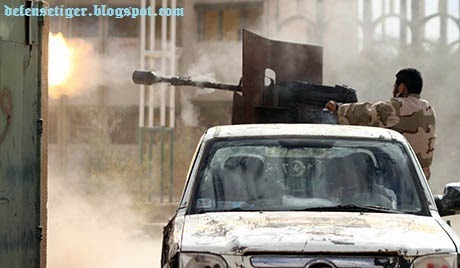
Libya still in chaos three years after Gaddafi

Libya’s former PM left the country last week after Parliament voted him out of office. A North Korean-flagged oil tanker, the Morning Glory, illegally took a cargo of crude from rebels in the east of the country and safely left the port, ignoring a government minister’s threat that the vessel would be “ turned into a pile of metal” if the cargo ship sailed away. Militias based in Misrata in northwestern Libya, known for their violence and independence, have launched an offensive against the eastern rebels which could be regarded as the beginning of a civil war between western and eastern Libya.
Without a central government with any real power, Libya is breaking into pieces. And all this is happening nearly three years after Muammar Gaddafi’s counteroffensive to suppress the uprising in Benghazi. With the US keeping its covert involvement in the Libyan events, NATO launched a war in which rebel militiamen played a secondary role which led to the overhrow of the Gaddafi regime and to the killing of Gaddafi.

The past weeks offer have shown that leaders and countries which were full of enthusiasm in 2011, when the war in the supposed interest of the Libyan people broke out, have little interest in the developments in Libya now. Initially, US President Barack Obama spoke proudly of his role in the prevention of a “massacre” in Benghazi at that time. But neither Washington nor London or Paris voiced any protest after the militiamen, backed by NATO, opened fire on a demonstration against America’s presence in Tripoli in November last year in which at least 42 protesters were killed.

Coincidentally, it was last week that Al-Jazeera broadcast the final episode in a three-year investigation of the Lockerbie bombing that killed 270 people . For years this was considered to be Gaddafi’s greatest crime but the documentary proved beyond reasonable doubt that the Libyan intelligence officer, Abdelbaset al-Megrahi, convicted of carrying out the bombing, was innocent. Iran, acting through the Palestinian Front for the Liberation of Palestine – General Command, ordered the blowing up of Pan Am 103 in revenge for the shooting down of an Iranian passenger plane by the US navy carrier in 1988.
As you know, journalists say that if you want to find out government policy, imagine the worst thing they can do and then assume they are doing it.

However, the NATO countries that overthrew Gaddafi – and by some accounts gave the orders to kill him – did not do that because he was a tyrannical leader. It was rather because he pursued a nationalist policy backed by big money which was at odds with western policies in the Middle East. This is equally true of Western and Saudi intervention in Syria.

Libya is breaking apart. Its oil exports have fallen from !.4 million barrels a day in 2011 to 235,000 barrels a day. Militia s hold 8,000 people in prisons, many of whom say they have been tortured. “The longer Libyan authorities tolerate the militias acting with impunity, the more entrenched they become, and the less willing to step down,” said Sarah Leah Whitson, Middle East and North Africa director at Human Rights Watch.

It is a sorrowful fact that the militias in Libya are getting stronger. Libya is a country where ethnic warlords are often simply well-armed racketeers using their power and taking advantage of the absence of an adequate police force. Nobody is safe in the country: the head of Libya’s military police was killed in Benghazi in October while Libya’s first post-Gaddafi prosecutor general was shot dead in Derna on February 8. It often happens that the motives for killings are obscure.

Western and regional governments are responsible for much that has happened in Libya, but so too should the media. The Libyan uprising was reported, mainly, as a clash between good and evil. Gaddafi and his regime were demonized and his opponents were treated with a lack of skepticism.

Can anything positive be learned from the Libyan experience ? Of importance here is that demands for civil, political and economic rights, which were at the centre of the Arab Spring uprisings, mean nothing without a nation state to guarantee them; otherwise, national loyalties will find themselves in a state of sectarian, regional and ethnic feud.

“Freedom under the rule of law is almost unknown outside nation-states,” writes a British politician, journalist and author, Daniel Hannan MEP, in a succinct analysis of why the Arab Spring failed. “Constitutional liberty requires a measure of patriotism, meaning a readiness to accept your countrymen’s disagreeable decisions, and to abide by election results when you lose,” he added in conclusion.

Voice of Russia, Independent
Read more: http://voiceofrussia.com/2014_03_16/Three-years-after-Gaddafi-Libya-still-in-chaos-9983/

Monday, February 3, 2014

New nuclear threat? Radiation levels hit record high at crippled Fukushima


TEPCO has detected a record 1.9 million becquerels per liter of ray-emitting radioactive substances at Fukushima’s No. 2 reactor. Besides, the analysis of water samples from beneath the No. 4 reactor's well has shown radioactivity in deeper groundwater, raising new concerns of radioactive substances leakage into the ocean, NHK broadcasting company reports.

The previous record of 1.8 million becquerels of beta-ray sources per liter was registered at reactor No. 1 on December 13.

Apart from beta-ray emitting substances, 6.7 bq/liter of radioactive cesium and 137, 89 bq/liter of strontium were found by TEPCO experts, but the company’s officials urged not to jump to conclusions, adding that more examinations are needed. They also suggested that the figures could be wrong due to the possibility of mixing up radioactive substances while getting the samples.

Radiation-contaminated water leakages have been the major threat to Japan’s population and environment since March 2011 when the Fukushima disaster happened.

So far TEPCO has reported about two major leaks of highly radioactive water into the ocean from storage tanks – a 300-ton leak in August and 430 liters in October.

Japanese ministry of education has recently concluded that the children living in the proximity of the Fukushima nuclear plant are prone to obesity more than those living in the rest of the country. The reasons for the phenomenon the ministry officials see in the children’ changed daily routine as they are forced to reduce their out-door time due to the air pollution; authorities also claim relocation of families to other parts of the prefecture to have a huge impact on the children’s lifestyles as well.

The proportion of obese children in Fukushima was the highest compared to Japan’s other 46 prefectures in six of the 13 grades, from kindergarten to the third grade of high school. In total Fukushima’s young population is on average 20% heavier than in the rest of the country, and that’s in every school grade, while before the disaster the number were within the average around the country.

Ever since the earthquake and the tsunami crippled the plant in 2011, 56 schools were forced to confine the children to indoors for the bulk of time, having them spend very little time in the open air.

Parents who express great concern for their children’s well-being tried to leave the area, but the ones who stayed could in fact damage them becoming the circumstantial cause for their obesity.

However, the general studies indicate that the recent trend of obesity is becoming more and more overwhelming among young people, as they are getting accustomed to westernized diet replacing Japanese tradition meals containing a lot of fish and vegetables. Also, kids are less athletic now, as well.

The concerns of people who stayed in the vicinity of the crippled plant are have surely not been lifted by the authorities’ recent claims that the prefectural government had failed to monitor the progress of decontamination work.

Garbage bags filled with dirt and debris collected from contaminated areas have been left by workers in a park near the apartments, and the children used them to climb on.

According to research of the Mainichi newspaper, that radiation levels near the bags was 2.23 microsieverts per hour, and that is 10 times the legal limit. Waste has also been dumped close to schools.