Showing posts with label maritime surveillance aircraft. Show all posts

Tuesday, November 17, 2015

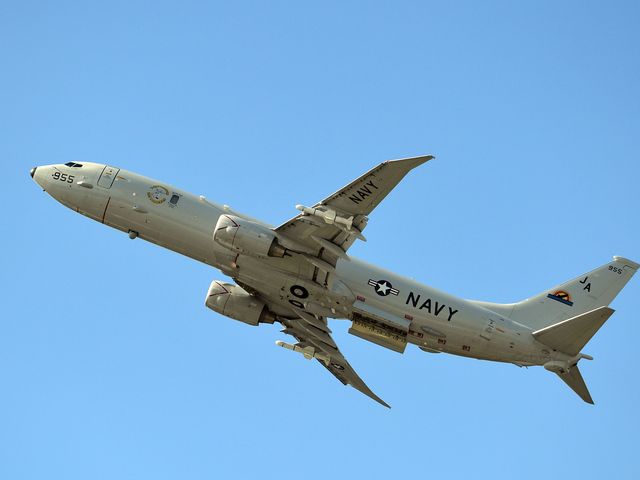
Lockheed Pitches C-130 To UK As Alternative to P-8

As the UK considers how to fill its maritime surveillance gap, Lockheed Martin is pitching a modified version of its C-130 multi-mission aircraft as a cheap alternative to Boeing’s costly P-8 Poseidon.

The UK is currently weighing whether to buy the P-8 after the 2010 Strategic Defence and Security Review scrapped plans to buy BAE Systems’ long-delayed Nimrod MRA4 jet. With the release of the new SDSR just a few weeks away, Lockheed representatives told reporters Nov. 9 the company could modify the UK’s 10 existing C-130s to fulfill the submarine-hunting mission at significantly lower cost.

Lockheed pitched the idea to the UK Ministry of Defence about 18 months ago, according to Peter Ruddock, business development director for the company’s UK contingent. Lockheed has done 90 percent of the work necessary to repurpose the aircraft to fit the maritime surveillance mission, he said. The last piece of the puzzle is integrating the submarine-hunting torpedoes onto the aircraft, a project company engineers are currently working.

Lockheed’s solution will be about 40 percent of the price of the competition, Ruddock said, estimating that the team could get the first four aircraft to full capability in just 41 months.

Lockheed is proposing equipping the UK’s existing C-130 with the mission system developed for the Merlin naval utility helicopter, which is capable of anti-submarine warfare and medium-lift transport, Ruddock said. Lockheed would equip the aircraft with submarine-hunting torpedoes, as well as sonobuoys and life rafts. The aircraft also has advanced EO/IR sensors to detect hostile submarines, he said.

The project also would create jobs in the UK, as 80 percent of the work could be done in-country, Ruddock said.

“We’re not knocking the P-8,” Ruddock said. “I think what we are saying is we can give you P-8-type capability at a much lower cost point because you already have the airframe.”

The UK MOD “rigorously” examined Lockheed’s proposal, and concluded that the project is “credible,” Ruddock said. However, he emphasized the government has not yet set its new requirement or placed any orders for Lockheed’s proposed planes.

On the other hand, Boeing officials say the P-8 is a more cost-effective solution for the UK at the end of the day.

The cost of the P-8 has come down 30 percent, James Detwiler, Boeing’s director of business development for maritime programs, told Defense News on Monday. It is 75 percent cheaper on a cost-per-hour basis to operate the P-8 than the legacy aircraft it is replacing, he said. Additionally, he said, if a foreign nation coordinates its buy with the US Navy’s, both can benefit from the economy of scale.

Many nations are finding that reconfiguring existing aircraft for maritime patrol is actually cost prohibitive, Detwiler said .

Fred Smith, Boeing’s director for global sales and marketing, said the P-8 is cost effective and low risk. However, he acknowledged certain countries that don’t need anti-submarine warfare capability might choose Boeing’s smaller, cheaper Maritime Surveillance Aircraft.

The P-8 is not the right solution for every country, he said during a briefing at the air show.

“We know there is a set of countries that need to do long-range, armed, anti-submarine warfare … they need to protect their strike groups, their carrier battle groups, they need to project power, they need to defend their territories at sea and beyond,” he said. “There are other customers that are looking for other capability, non-anti-submarine warfare, non-armed capability, and we have that on our Maritime Surveillance Aircraft.”

Boeing anticipates selling 100 aircraft internationally over the next ten years, Smith estimated.
Tuesday, April 21, 2015

The ATR 72 MP, Maritime Surveillance Aircraft

The ATR 72 MP is a maritime surveillance aircraft developed by Alenia Aermacchi. Built based on the ATR 72-600 platform, the ATR 72 MP serves as a low-cost, consistent, sea-surface surveillance platform for the military forces across the world.


ATR 72 MP is a maritime surveillance aircraft manufactured by Alenia Aermacchi.


The aircraft helps to detect, locate and rescue people from broken ships and aircraft. It offers cost-effective surveillance and exclusive economic zone patrol and search-and-rescue (SAR).
The equipment installed on the aircraft, such as sensors, communications equipment and mission systems can be customised depending on the mission requirement.

ATR 72 MP aircraft orders and deliveries

The Italian Air Force awarded a contract for delivery of four ATR 72 MP maritime patrol aircraft to replace its ageing Breguet Atlantic aircraft, in December 2008.
A $137.4m contract was awarded to Alenia Aeronautica in November 2011 for providing logistical support for four ATR 72 MP aircraft of the Italian Air Force.

Design features of ATR 72 MP patrol aircraft

Compared to its predecessor the ATR 42 MP, this aircraft has significant endurance, more interior space and the latest control systems.The ATR 72 MP is manufactured with composite materials, which make the aircraft highly resistant to damage and corrosion. The airframe is designed to install sensors and other function-specific modules such as bubble windows and an in-flight operable door.

The ATR 72 MP has an operational empty weight of 14,586kg and maximum take-off weight of 23,000kg. The aircraft can carry a payload of 5,000kg.

ATR 72 MP aircraft cockpit and avionics

The ATR 72 MP aircraft is equipped with a glass cockpit that integrates five LCD screens as a standard fitment, along with commercial-off-the-shelf (COTS) components for better interface and high resolution graphics.
The SELEX Galileo airborne tactical observation and surveillance (ATOS) mission system is installed with four interchangeable strategic operator stations to simplify the operations. It includes three sensors including an electro-optical turret FLIR system Star Safire HD, AESA SELEX Galileo Sea Spray 7000E search radar and an ESM (Electronic Support Measures) sensor from Elettronica.
The 360° operated turret helps to identify targets around the clock using its wide elevation range.
The multimode, X-band 360° search radar enables long-range target detection, tracking and identification of approximately 100 targets at a time using track while scan application (TWS).
The ATR 72 MP aircraft includes automatic identification system (AIS) and a V/UHF 360° direction-finding device to locate the direction of range radio emitters between 30MHz and 470MHz frequencies.
The side-looking airborne radar (SLAR) installed on the aircraft helps to detect water pollution from long range and trace underwater activities close to the sea surface. The Hyper Spectral Scanner (HSS) of the aircraft helps to find the type of polluting agent.

ATR 72 MP self protection system and countermeasures

Self protection systems on the ATR 72 MP aircraft include chaff and flare dispenser and a warning system for radars, missiles and lasers. The standard aircraft configuration includes ESM and self-protection systems for reconnaissance and operations in mission critical battlefield.

Engine details of ATR 72 MP

The power plant of the aircraft includes two Pratt & Whitney Canada PW 127M turboprops, which each provides a maximum take-off power of 2,750shp.
The engine is fitted with a Hamilton Sundstrand 568F six-blade, variable-pitch propeller.

ATR 72 MP aircraft performance

The ATR 72 MP aircraft can cruise at a maximum speed of 459.29km/h. It can fly at an operational altitude of 7,620m, but has a maximum endurance of ten hours at 1,524m altitude.
The aircraft can take-off from runways as short as 1,170m and land on runways as short as 630m.
The aircraft can be operated in extreme weather conditions and altitudes. It features a Hotel Mode, which enables the aircraft to operate from remote bases.