Thursday, November 26, 2015

Russia Will Take Diplomatic, Military Measures After Turkey Downs Su-24

Russian Prime Minister Dmitry Medvedev said Thursday that Moscow has already taken and will take diplomatic and military measures after the downing of a Russian Su-24 bomber by Turkey.

The Russian prime minister said that the downing of the Russian warplane over Syria was an "act of aggression" committed by Turkey.

"This was certainly an act of aggression against our country by Turkey, our neighbor and a member of the North Atlantic Treaty Organization."

"Military and diplomatic measures with regard to this crime have already been taken and more will be taken," Medvedev said during a government meeting on Thursday.

On Tuesday, a Russian Su-24 jet crashed in Syria. Russian President Vladimir Putin said that the plane was downed over Syrian territory by an air-to-air missile launched by a Turkish F-16 jet, and fell 4 kilometers (2.5 miles) from the Turkish border. Putin described the Turkish attack as a "stab in the back" carried out by "accomplices of terrorists."

Dmitry Medvedev has instructed the Russian government on Thursday to work out measures against Turkey after Tuesday's downing of a Russian military jet.

Moscow's response measures against Ankara may affect financial operations, investment projects, as well as the work of Turkish companies in Russia, Medvedev said.

According to Medvedev, measures taken by Russia will be temporary and depend on the development of Moscow-Ankara relations and international situation.

"[The measures include] the suspension of the implementation of programs of economic cooperation, restrictions on financial transactions and on foreign trade transactions, changes to customs duties, measures in thetourism sector, to affect the tourism sphere, transportation, including transits."

The prime minister said that Russian authorities were considering the introduction of bans on Turkish companies' activities in the country.

There could also be introduced restrictions or bans on the supply of products, including foodstuffs, and the work of Turkish companies on Russian territory, Medvedev said.

According to him, the measures will be introduced in accordance with a 2006 law "designed for similar situations."

Speaking at the same meeting, Russia's Economic Development Minister Alexei Ulyukayev underscored that any possible measures introduced against Turkey by Russia would not contradict WTO norms.

Russian agricultural watchdog Rosselkhoznadzor has already announced health and sanitary claims against a Turkish company specializing in poultry production, while the Russian Foreign Ministry recommended tourists to avoid traveling to Turkey.

J-31 Gyrfalcon, A Supplement to China’s J-20 Against US F-22 and F-35 Fighters

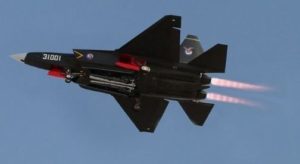
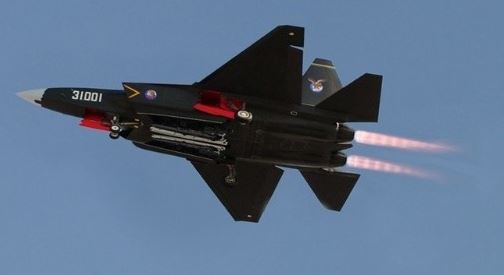
The 16th Beijing International Aviation & Aerospace Exhibition was held from September 16th to 19th, and the large model of China’s J-31 “Gyrfalcon” stealth fighter was displayed, which is a fifth Generation Multi-Purpose Medium Fighter aiming at international market, a stealth fighter of the same generation as US F-22 and F-35 fighters.

According to information revealed on the expo, aerodynamic performance and stealth performance of Chinese J-31 (FC-31) stealth fighter exceed many traditional fighters, and its avionics system will also be upgraded.

Some other specification of J-31 fighter was also unveiled. The highest speed of J-31 stealth fighter is Mach 1.8, and the largest combat radius is 2000 kilometers, which meet demands for carrier-based aircrafts.

Besides, J-31 stealth fighters owns absolutely independent intellectual property, excellent composite combat performance, single-seat double-engine, twin vertical fin and flying tail, large S-type bending air inlets on two sides, and interior weapon cabins.

Chinese J-31 fighter

Like US F-22 and F-35 fighters, China’s J-31 stealth fighter also features high viability, low radar detectability and low infrared radiation, as well as outstanding electronic countermeasures and low vulnerability design. J-31 also has powerful target detecting capability and outer information composite ability, excellent situation awareness, information sharing ability, multi targets BVR attack, arge off-boresight launching all-round air combat ability, air-to-land and air-to-sea precise attack ability.

With multiple mature technologies, J-31 stealth fighter is expected to be launched for international market in five years, and become a mature and cheap fifth generation fighter by 2024, and thus replace JF-17 block 2 as an exporting fighter jet of China.

J-31’s developer AVIC also revealed that J-31 fighter will be very cheap, might be cheaper than the fourth generation fighters of the west, bad news for western countries.

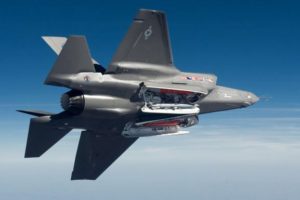
US F-35 fighter

German media reported that J-31 plagiarizes a lot of technologies of F-35 fighter, but Russian expert thinks J-31 is not a copycat of F-35.

J-31 fighter is now using Russian RD-93 engine, which will be replaced by homemade WS-13 upgrade version, and will have variants including carrier-based aircraft and fighter bomber.

In face of F-22 and F-35 stealth fighters of USA, China’s J-31 might enter service in 2020, and another stealth fighter of China J-20 owns long-range attach ability and can reach West Pacific. J-31 will be a supplement to J-20 fighter.

American officials think if China’s training, fighter amount, radar reliability and other airborne devices keep making progress, J-31 stealth fighter will soon exceed American main fighters – F-15 and F/A-18, and thus become a super weapon of China.

Indian Army Test Fires Prithvi-II Missile

India on Thursday successfully test-fired its indigenously developed nuclear capable Prithvi-II missile, which has a strike range of 350 km, as part of a user trial by the Army.

The missile test was carried out from a mobile launcher from launch complex-3 of the Integrated Test Range (ITR) at Chandipur at 1210 hrs.

"The trial data of the missile conducted by the Strategic Force Command (SFC) shows positive results," said a defence source. The surface-to-surface Prithvi-II missile is capable of carrying 500 kg to 1,000 kg of warheads and is thrusted by liquid propulsion twine engines. It uses advanced inertial guidance system with manoeuvring trajectory to hit its target.

"The missile was randomly chosen from the production stock and the entire launch activities were carried out by the specially formed SFC and monitored by the scientists of Defence Research and Development Organisation (DRDO) as part of training exercise," a defence scientist said.

"The missile trajectory was tracked by DRDO radars, electro-optical tracking systems and telemetry stations located along the coast of Odisha," the source said.

The downrange teams on board a ship deployed near the designated impact point in the Bay of Bengal monitored the terminal events and splashdown, they said.

Inducted into India's armed forces in 2003, Prithvi II, the first missile to be developed by DRDO under India's prestigious IGMDP (Integrated Guided Missile Development Program) is now a proven technology.

Such training launches clearly indicate India's operational readiness to meet any eventuality and also establishes the reliability of this deterrent component of the country's strategic arsenal, they said.

The last user trial of Prithvi-II was successfully conducted on February 19, 2015 from the same test range in Odisha.

Spain Willing To Arm Its MQ-9 Reaper Drones, Buying From USA

Spain has confirmed that it will eventually try to weaponise its future fleet of General Atomics Aeronautical Systems MQ-9 Reaper unmanned air vehicles, although the immediate priority is to bring the surveillance-only variant into operation.

Madrid's programme to acquire a class III UAV for its air force began in September last year, with the Reaper eventually selected in mid-2015 over the competing Israel Aerospace Industries Heron TP.

“The LOA [letter of agreement] from the US government is about to be signed, and this could be done before the end of the year,” Col Enrique Martinez Vallas, former chief of acquisitions programmes for the Spanish Air Staff, told a London conference on 19 November.

Vallas says there are no technical obstacles to adding offensive capability to the Reaper as it already has hardpoints for the carriage of weapons, but the US government would have to authorise any request for weaponisation.

That has become enabled following the easing of export restrictions in February, with Italy in November becoming the first nation - outside of the UK - to receive permission to arm its MQ-9 fleet.

Spain could follow suit, but Vallas notes that it took some ten years for Italy to be permitted to arm its Reapers. Madrid, he says, is more concerned with completing the basic acquisition for now.

US Air Force

Vallas says that although both the Heron TP and the Reaper met the air force's requirements, commonality with NATO allies was a key reason for the selection of the US-built platform.

Four aircraft and two ground control stations are due to be delivered under the proposed deal, and training will begin in 2016, Vallas says.

The first two aircraft plus one ground control station (GCS) will be delivered in 2017. Initial operational capability will be achieved with the second delivery, which is expected in 2018, while full operational capability and the final aircraft are expected in 2020.

However, this schedule may be advanced if the Spanish can secure earlier production slots. Although the Royal Netherlands Air Force is seeking to acquire a similar number of systems, its acquisition has been held up over funding issues.

The Spanish air force is also in the process of acquiring an upgraded variant of the Airbus Defence & Space Atlante UAV that will be able to carry a multi-sensor and weapons payload.

The contract may be signed this year or soon after the next cabinet is formed following a general election on 20 December. “It has more capabilities with automatic take-off and landing, increased endurance and payload,” Vallas says.

Fate of Two Pilots of The Russian Su-24 Downed By Turkish F-16s

Yet, two crew (Pilot + Navigator) ejected safely from the attacked Su-24 fighter-bomber one of them most probably the pilot killed. A photo of the killed pilot circulating among the websites disseminating this news issue. Another one, the navigator, has been saved by the rescue team of the Russian Airforce's Latakia Base Station. Here are some of the photos of the crews ejecting and one of the killed pilot.

Russian Su-24 Shooting Heightens Tension With Turkey

The US government is trying to prevent further encounters between the Russian and Turkish air forces over the border zone between Turkey and Syria.

On 24 November, a Turkish Lockheed Martin F-16 shot down a Russian Sukhoi Su-24, with Ankara claiming that the latter had entered Turkish airspace. The incident between the NATO member and Moscow has created major concern in Washington DC.

Following the incident, Israeli sources suggested that if the Russian strike aircraft had been flown near an "enclave" of Turkey close to the Syrian border then it should have been obvious that its crew had no "bad intentions".

Russian President Vladimir Putin has called Turkey's action "a stab in the back" carried out by the "accomplices of terrorists", and warned that the incident will have "serious consequences" for Moscow's relations with Ankara.

Turkey confirms that the downed Su-24 was engaged by two of its F-16s. It says the aircraft was targeted in line with its rules of engagement, after "violating the country's airspace".

Russia has rejected the Turkish version of events, claiming that its aircraft had not violated Turkish airspace, and had been flying at an altitude of 6,000m (19,700ft).

There have been conflicting reports about the fate of the Su-24's two crew members, who ejected following the engagement. As-yet unconfirmed claims also suggest that a Russian rescue helicopter that was sent to the area was hit by a surface-to-air missile and then destroyed by an anti-tank weapon after making an emergency landing.

Israel is following the situation very closely, as it is also conducting aerial activity over Syria, according to Western sources.

USAF Denies To Acquire More Fourth Generation Fighters

The US Air Force has denied any plans to purchase another tranche of Lockheed Martin F-16 or Boeing F-15 combat jets following reports it could seek bids for up to 72 new aircraft.

According to comments attributed to a senior US Air Combat Command official at an international fighter conference in London last week, the current Lockheed F-35 procurement plan could prove unaffordable, and another fighter wing of F-15s, F-16s or perhaps even F/A-18s is being considered to supplement the current fleet – which will serve into the 2040s as F-35s are delivered.
The air force is seeking 1,763 F-35As through 2038, and in the interim it intends to modernise and upgrade its F-16s and F-15s with new active electronically scanned array (AESA) radars and electronic warfare systems.

Asked to categorically confirm or deny any new fighter purchase, a spokesman for the service’s acquisition office says: “At this time the air force has no plans to acquire 72 new F-15s or F-16s, although the air force is always looking at options to be prepared for a dynamic global security environment.”

In his final press engagement at the Pentagon on 24 November, outgoing air force acquisition chief Bill LaPlante was dismissive of suggestions that another F-15 or F-16 fighter wing is being sought, but he agrees that the F-35 is difficult to afford.

“That story was news to me,” he quipped. “We’re always struggling to get the production rate as high as we can get it on F-35. That’s as true as saying it’s cold outside. It’s always true.”

The conventional take-off and landing A-model costs just shy of $100 million per aircraft, but LaPlante says the F-35 joint programme office and the Lockheed industry team are trying to reduce that to $85 million as the manufacturing process matures.
The service stopped acquiring fourth-generation F-16s and F-15s many years ago to instead focus on developing and procuring stealthy F-22s and F-35s, but both acquisitions were far more expensive and lengthy than originally planned.

The opportunity to purchase more legacy jets, which have been kept in production through foreign military sales, is closing fast, with the Lockheed F-16 and Boeing F-15 and F/A-18 assembly lines potentially closing before the turn of the decade if no more domestic or foreign orders materialise.

The air force has budgeted for 44 F-35s in fiscal year 2016 and 48 in 2017, and is building toward a production cadence of 60 jets per year by 2018 and then 80 beyond 2020.

Wednesday, November 25, 2015

J20 8th Prototype 2017 Conducts Its Maiden Flight

The introduction of J20 prototype "2017" marks a total 8 prototypes currently available for testing. Time will tell if this is the last prototype coming out of Chengdu Aerospace Corporation before pre-production small-batch run commenced.
Notice the differences between 2011 vs 2017, specially that forward fuselages.


Pakistan Airforce's Spada 2000 Air Defense System (Medium Range SAM)

PAF bought 10 batteries of Spada 2000 system in 2007. Each battery has two firing sections, each section has Missile Launcher housing six ready-to-fire ASPIDE 2000 missiles with a range of 25km. RAC-3D (Spada-2000's radar) has the capacity to track 100 targets simultaneously within a range of 60km.


In Photos: Russian Su-24 Fighter-Bomber Shot Down Over Syrian Sky

Two parties, Russian & Turkish, claiming their own positions over Su-24 jet shot down issue. Turkish officials said that tje Su-24 jet which one has been shot down by Turkish Airforce F-16 yesterday violated Turkish airspace near Turkomen Mountains border. In the other hands, Russian Defense Minister & other official said that the jet was inside Syrian skies while being shot down by ground based anti-aircraft artillery. Two pilots ejected safely but one of them already killed by rebels while another pilot being captured by them, sources ensured media.  


World's First Hypersonic Weapons Are Operational Inside China's Dragon's Den, Rumor Suggests

Rumor has it, China has the world's first opeartional hypersonic weapon.

True or false-flag, China tested many times its hypersonic reentry vehicle very covertly under its "secret special weapons programs". Whether critics says, may be, Chinese defense establishments succeeded about their highly ambitious program ahead of US acquisition.

Would it change the game already parties playing regarding China's territorial disputes among its neighbors? Time will tell the truth.

New-generation Gripen ( Gripen-NG) Enters Final Assembly Phase At SAAB

Saab has lifted the joined fuselage section for its first Gripen NG prototype into final assembly, and says its programme is on track to deliver advanced capability to Sweden and export customer Brazil.

Revealing the advance at the Dubai air show on 10 November, Ulf Nilsson, head of Saab’s aeronautics business area, said the fighter’s three main sections required only one minor adjustment before they could be joined. “We had less [production line] feedback on the first aircraft than we have on the running production of the [Gripen] C/D,” he notes, attributing this to the new model’s all-digital design.

Saab

Nilsson confirms that lead prototype aircraft 39-8 is on schedule to enter flight-testing during 2016, but will not reveal a target date.

He also highlights the progress being made with the manufacturer’s Gripen E/F deal with Brazil. A first group of 50 Embraer engineers and their families recently arrived in Linköping, with a total of 300 to spend up to two years in Sweden to build the Brazilian company’s design and production expertise on the type. “It’s full-speed ahead – a real long-term partnership,” he says, adding: “they call it a Brazilian aircraft; they are committed to the programme.”

With Saab holding contracts to produce 60 new-generation aircraft for Sweden and 36 for Brazil, Nilsson says the company is looking to build on its success. It is looking with interest at emerging requirements in Finland and Belgium, and also hopes to meet the needs of nations including Bulgaria, Croatia and Slovakia through deals supported by the Swedish government.

Noting that Saab already has the Czech Republic and Hungary as operators, he quips: “Maybe Gripen will be the true ‘Euro fighter’!”

Longer-term opportunities could also lie with Indonesia, Malaysia, the Philippines and potentially in southern Africa, but Saab notes that it is not promoting the aircraft to nations in the Middle East.

Meanwhile, Saab last month delivered its new MS20 operating standard software for the Gripen C/D to its Swedish customer, with final flight testing now under way. The enhancement – which will soon enter operational service – includes the addition of MBDA’s Meteor beyond-visual-range air-to-air missile.

The company also took advantage of the Dassault-led Neuron unmanned combat air vehicle’s recent visit to the Vidsel test range in Sweden, by flying its Gripen NG demonstrator in partnership with the stealthy type.

Pia Ericsson/FMV

Nilsson declines to provide details of the test activity conducted by the Gripen, but confirms: “we can feel comfortable that we have the right performance for the future in this area.”


Source: Flight Global 

Lockheed Martin To Integrate JASSM-ER On Vintage B-52H

The Boeing B-52H is the vintage bomber that just won’t quit, and now the Cold War-era “Stratofortress” is being outfitted with one of America’s newest and longest-range conventional cruise missiles.

Lockheed Martin has been put on contract to arm the 54-year-old aircraft – which has outlived many of those who predicted its retirement – with the extended-range Joint Air-to-Surface Standoff Weapon (JASSM) under a $9.1 million contract announced earlier this month.

In a statement to Flightglobal, LM director of long-range strike systems Jason Denney confirms that the B-52 will be updated to carry the turbofan engine-powered cruise missile internally on a new digitised rotary launcher and externally on its pylons.

The bomber has long carried conventional cruise missiles, namely the non-nuclear derivative of the AGM-86 “ALCM” that has an unclassified range of 600nm and is being retired as supplies run low.

Boeing B-52s can carry up to 20 nuclear-armed Air-Launched Cruise Missiles (ALCMs) and by 2018 will probably be carrying a similar number of smarter, non-nuclear Lockheed Martin JASSM-ERs.

US Air Force

Already equipped to carry the shorter-range baseline JASSM missile on its pylons, adding the extended range variant more than doubles the bomber’s JASSM strike distance to 500nm (926km). That allows lumbering, non-stealthy B-52H to punch out targets while keeping clear of hazardous air defence systems well into the future.

According to Lockheed, the B-52 has only ever captive-carried the JASSM-ER during operational testing, and the bomber now joins the Lockheed F-16 and soon the Boeing F-15E on the integration to-do list. The weapon is already deployed on the Boeing/Rockwell B-1B. B-52 integration will wrap up in 2018, as will the project to arm the F-16.

“F-15E integration will be next in line,” says Denney. “The expansion of the JASSM-ER employment aircraft set will significantly enhance the US warfighter’s first-day, first-strike capabilities.”

The baseline JASSM missile has been in serial production for over a decade but production recently switched to the new double-range JASSM-ER (500nm unclassified).

Lockheed Martin

The beefing up of Stratofortress weaponry for conventional warfighting comes as the air force removes nuclear weapons from dozens of B-52s previously assigned to the strategic deterrence mission to achieve compliance with new strategic arms limitations agreed with Russia.

The air force currently plans to retire the supersonic B-1B and the B-52H in the 2040s as their Long-Range Strike Bomber (LRS-B) replacement steps in.

JASSM-ER takes advantage of several concurrent digital upgrades that will allow every B-52 to carry smart weapons internally for the first time and on its pylons. The Boeing-led Combat Network Communications Technology improvement will further allow B-52s to update their missions plans via satellite and retarget weapons in flight – as most other combat aircraft have been doing for decades.

The B-52's rotary launcher, seen here carrying up to eight ALCM cruise missiles, is being upgraded to carry fully digital smart weapons and decoys.

Joint Air-to-Surface Standoff Missiles ( JASSM)

JASSM is a long-range, conventional, air-to-ground, precision standoff missile for the U.S. and allied forces. Designed to destroy high-value, well-defended, fixed and relocatable targets, JASSM’s significant standoff range keeps aircrews well out of danger from hostile air defense systems.

A 2,000-pound class weapon with a penetrator/blast fragmentation warhead, JASSM employs precision routing and guidance in adverse weather, day or night, using a state-of-the-art infrared seeker in addition to the anti-jam GPS to find a specific aimpoint on the target. Its stealthy airframe makes it extremely difficult to defeat.

JASSM is integrated on multiple aircraft including the B-1, B-2, B-52, F-16, and F-15E. Internationally, JASSM is certified on the Royal Australian Air Force’s F/A-18. Future integration efforts will focus on the U.S. and international versions of Lockheed Martin F-35 Lightning II fighter aircraft and other international platforms.

With superior performance and affordable price, JASSM offers the best value of any weapon in its class.

Russia To Deploy S-400 Defense Missile System to Khmeimim Airbase in Syria - Defense Minister

The Russian Air Force base in Latakia will be reinforced with S-400 SAM system, which will soon be deployed there, Russia's Defense Minister Sergey Shoigu said on Wednesday.

"S-400 will be deployed on Khmeimim airbase in Syria," Shoigu said at a Defense Ministry meeting.

Earlier on Tuesday, the Russian Su-24 was shot down by a Turkish F-16 fighter jet near the Turkish-Syrian border. One pilot died in the incident. The second one was rescued and brought to the Russian airbase in Latakia.

Moscow maintains the jet did not violate Turkey's airspace. It ditched on Syria's territory four kilometers from the border.

Shortly afterwards, the MoD announced three steps to be taken following the attack on the Russian Su-24 bomber, including providing aerial cover by fighter jets for every airstrike, boosting air defense by deploying guided missile cruisers off the Latakia coast, and suspending all military-to-military contacts with Turkey.

The S-400 is Russia's most advanced anti-aircraft defense system. It is as an upgrade of the S-300 Growler family, designed and developed by Almaz Antei. The S-400 is employed to ensure air defense using long- and medium-range missiles that can hit aerial targets at ranges up to 400 kilometers. The S-400 is capable of hitting tactical and strategic aircraft as well as ballistic and cruise missiles. The system includes a set of radars, missile launchers and command posts, and is operated solely by the Russian military.

Khmeimim airbase in Latakia, Syria, accommodates Russian Air Force squadrons of Su-27SM and Su-30 fighter jets, Su-34 and Su-24 tactical bombers, which are all taking part in airstrikes on Islamic State positions. The airbase is protected by state-of-the-art air defense systems and radars. Khmeimim also has a fully operational unit for maintaining fixed- and rotor-wing aircraft and providing logistical assistance to pilots.

Russian Defense Minister Confirms Jet Shot Down by Turkey

Turkey has shot down a Russian military jet which it says violated its airspace near the Syrian border.

A military official, quoted by Turkey's Dogan news agency, said the plane was shot down by Turkish F16s, and that the pilots were given repeated prior warning.

Video posted by the Haberturk TV station appeared to show the jet coming down in flames, while separate footage showed two pilots parachuting to safety within hostile Syrian territory. Their fate remains unknown.

In a statement, the Russian defence ministry confirmed the jet was one of its SU-24 bombers.

But it denied Turkey's claims that the plane violated its air space, saying Moscow has proof the jet was over Syria "at all times".

And a Russian military official also denied Turkey's claims it brought the plane down with two F16s on regular border patrols - saying it believed the bomber was shot down by artillery fire from the ground.

Turkish President Tayyip Erdogan was briefed by the head of the military, while Prime Minister Ahmet Davutoglu ordered consultations with NATO, the United Nations and related countries, their respective offices said.

Nato's headquarters in Brussels, already in a tense state of lockdown following the terror threat there, said it would be issuing a statement later on Tuesday.

Rami Abdurrahman, who heads the Britain-based Syrian Observatory for Human Rights, said the warplane crashed in the Turkomen Mountains region in the coastal province of Latakia.

Various reports described the plane as coming down in hostile Syrian territory, and broadcaster CNN Turk cited local sources saying one of the pilots was in the hands of Turkmen forces who were searching for the other.

CNN Turk published images purporting to show two pilots parachuting safely to the ground, and reported that two helicopters had been sent from Turkey to try and retrieve them.

The Russian military has sent its own helicopters to search for the pilots on the ground, according to the Dogan news agency.

Source: The Independent Repirt

Turkey-China $3.44 Billion T-LORAMIDS Deal Scrapped Due To NATO Concern

Turkey has canceled a $3.4 billion long-range missile defense system tender which was provisionally awarded to China, a move that had stirred U.S. and Western concern, an official at the Turkish prime minister's office told Reuters on Sunday.
Chinese built HQ-9 Air Defense Missile System at "Victory Day Parade".
NATO member Turkey in 2013 had chosen China Precision Machinery Import and Export Corp as the preferred candidate for the deal, sparking Western worries over inherent security risks from Chinese technology.

"It has been decided that this tender will be canceled," an official at Prime Minister Ahmet Davutoglu's office said. "This decision has been signed off by the Prime Minister this week."

An official from Turkey's Defense Industry Undersecretariat, which has run the technical negotiations with China, said in July that a major stumbling block has been China's reluctance to make a technology transfer which could give Turkey the knowledge to operate the system and eventually replicate it.

The prime ministry official said Ankara was now planning to go solo. "Turkey will now launch its own project to build such a defense system," he said.

Chinese Foreign Ministry spokesman Hong Lei, asked about the tender being canceled, said on Monday he did "not have any knowledge on the relevant matter". He did not elaborate.

Turkey had given mixed messages on whether it was planning to integrate the system with NATO infrastructure or not and U.S. and European allies has wanted Turkey to use a system that is compatible with NATO's air defense.

During the tender, U.S. firm Raytheon put in an offer with its Patriot missile defense system. Franco-Italian group Eurosam, owned by the multinational European missile maker MBDA and France's Thales, came second in the tender.

Source:  Reuters